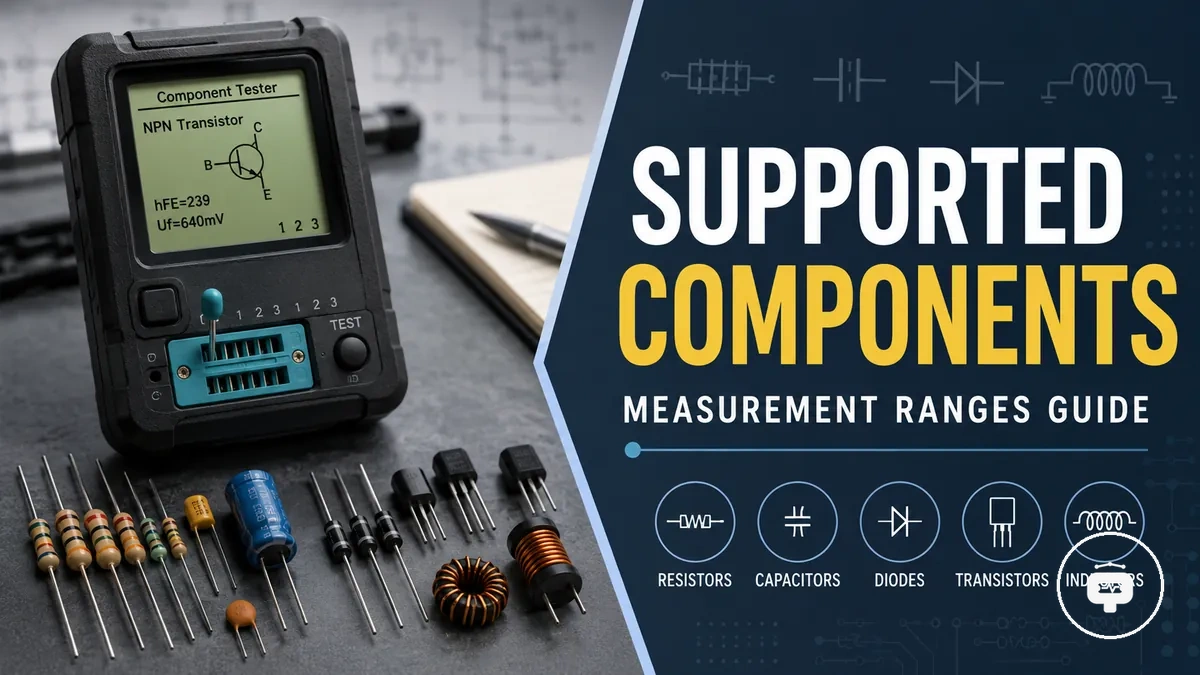
Electronic Component Tester Supported Components and Measurement Compatibility
Electronic component tester compatibility depends on the tester design, the component characteristics, and the electrical parameters the tester can identify or measure. An electronic component tester may support common passive and semiconductor components, but compatibility varies by tester configuration, connection method, and measurable attributes.
Supported component groups may include resistors, capacitors, inductors, diodes, transistors, and other electronic components that match the tester's detection capabilities. Whether a component can be evaluated depends not only on its type but also on whether the tester can recognise its characteristics and perform the required measurement.
Measurement compatibility is determined by the relationship between the component, the attribute being evaluated, the available measurement function, and the testing conditions. Attributes such as resistance, capacitance, inductance, semiconductor behaviour, or pin configuration may influence whether a tester can provide meaningful results, so suitability should be assessed according to the tester's supported capabilities rather than assuming universal compatibility.
Components Supported by Electronic Component Testers
Electronic component tester compatibility commonly includes passive and semiconductor components, but support depends on the tester's detection capabilities and the electrical characteristics of the component being evaluated. For a broader explanation of supported measurement functions, see what testers measure.
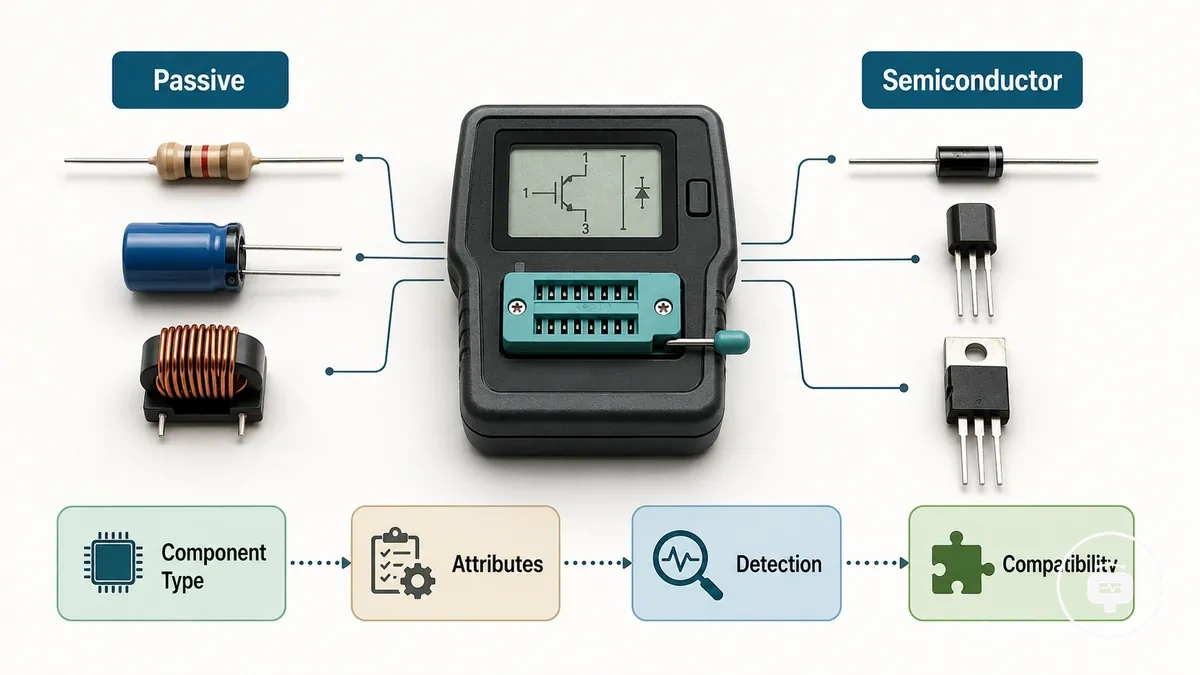
Electronic component testers may identify different component families when the device can recognise their measurable electrical behaviour. Compatibility depends on the relationship between the component type, the available detection method, and the tester's supported functions rather than on the component category alone.
- Passive components: Resistors, capacitors, and inductors may be identified or evaluated when their electrical properties fall within the tester's supported capabilities.
- Semiconductor components: Diodes, bipolar transistors, field-effect transistors, and similar semiconductor devices may be recognised when the tester supports their detection characteristics.
- Additional electronic components: Some electronic component testers may support other compatible devices, although available detection features and supported component categories vary between tester configurations.
Component compatibility should be evaluated by matching the component type and its measurable attributes with the tester's supported detection functions. This criteria-based approach helps determine whether an electronic component tester is suitable for the intended testing task without assuming universal support across all devices.
Passive Components Tested by Electronic Component Testers
Passive components such as resistors, capacitors, and inductors can often be evaluated by an electronic component tester, but compatibility depends on the measurable attributes of each component and the tester's supported capabilities rather than on the component type alone.
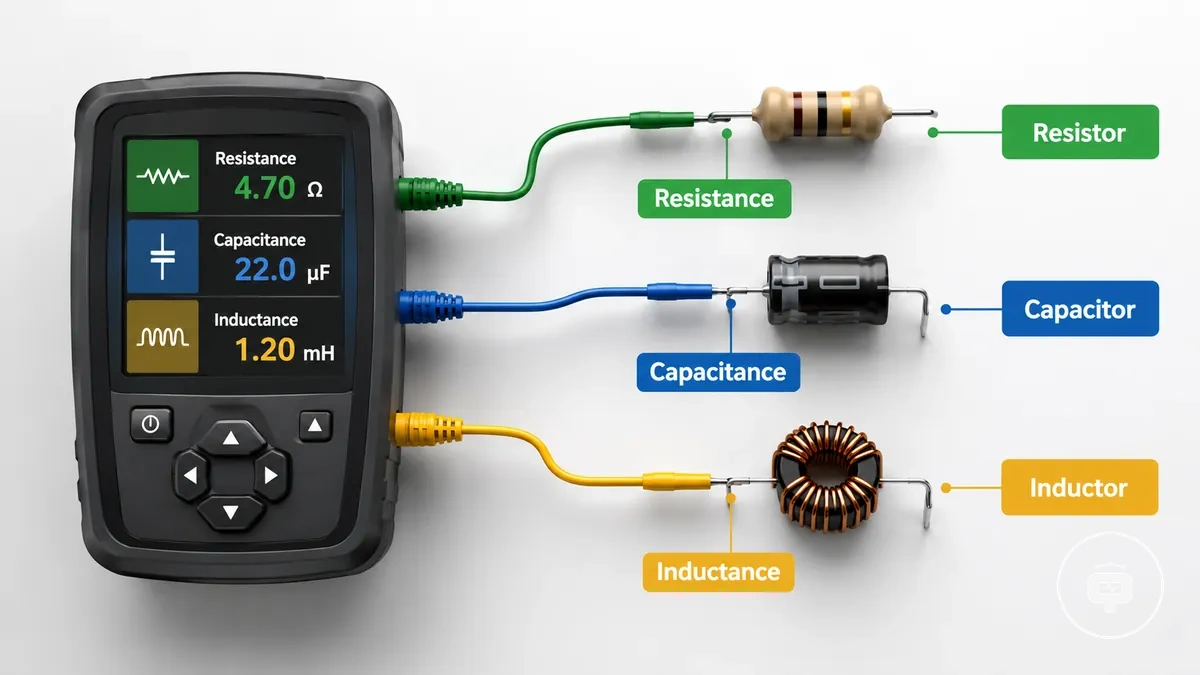
- Resistors: Compatibility depends on whether the tester can measure the resistance value under its supported testing conditions. Supported values may vary between tester configurations.
- Capacitors: Capacitor compatibility is determined by the tester's ability to identify capacitance and other supported electrical characteristics. Detection may differ according to tester capability.
- Inductors: Inductor support depends on whether the tester can recognise inductance and evaluate the relevant electrical behaviour within its supported functions.
Each passive component follows an entity-attribute-value relationship during testing. The component entity is evaluated through its measurable attribute, the detected value is interpreted within the tester's supported capability, and the compatibility outcome depends on that relationship. Because tester designs differ, identical support ranges should not be assumed across all electronic component testers.
Semiconductor Components Tested by Electronic Component Testers
Semiconductor components such as diodes, transistors, and MOSFETs can often be identified by an electronic component tester, but compatibility depends on the tester's supported functions and the detectable electrical characteristics of each device. Support varies by component type and tester capability, so identical identification across all semiconductor devices should not be assumed.
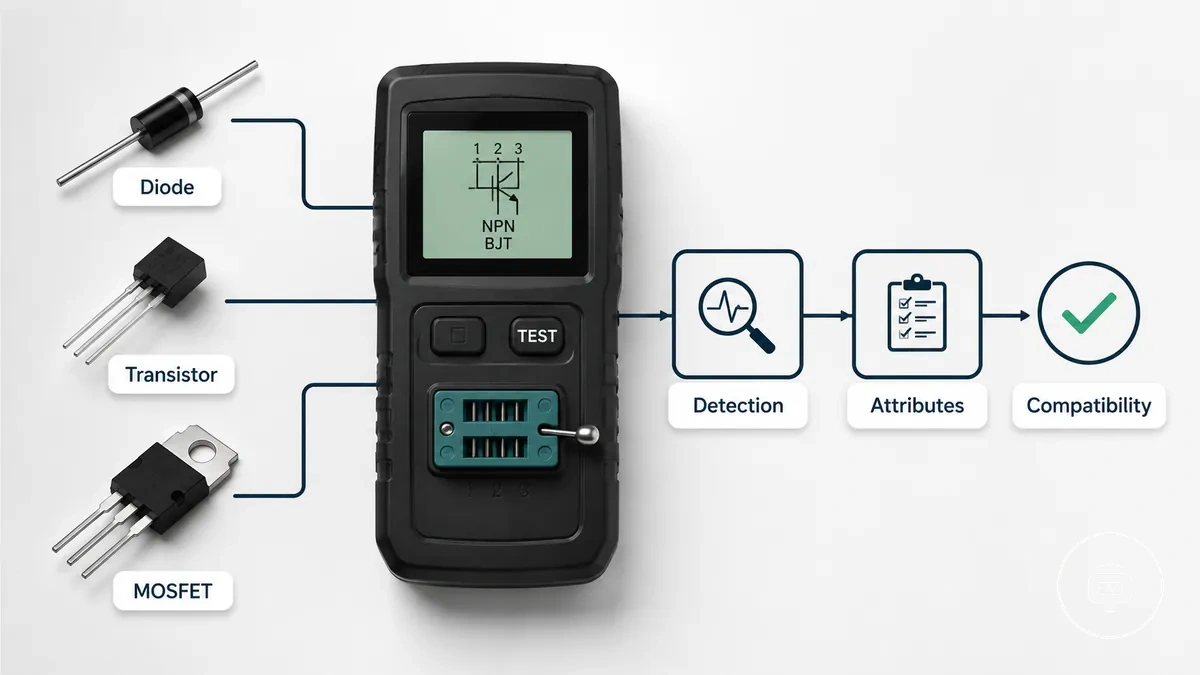
- Diodes: Compatibility depends on whether the tester can recognise diode characteristics and evaluate the supported electrical parameters associated with the device.
- Transistors: Bipolar transistors may be identified when the tester supports their detectable semiconductor characteristics and device configuration.
- MOSFETs: MOSFET compatibility depends on whether the tester can recognise the device type and evaluate the supported electrical attributes used for identification.
Semiconductor compatibility is determined by the relationship between the component type, its detectable attributes, the measured values produced by the tester, and the tester's supported functions. Although an electronic component tester may identify compatible semiconductor devices and report supported measurements, this capability does not replace complete circuit analysis or comprehensive device evaluation.
Component Tester Measurement Ranges and Detection Capabilities
Measurement compatibility depends on the tester's supported measurement ranges, detection methods, and the electrical characteristics of the component being evaluated. A component may be identified by an electronic component tester, but meaningful measurement depends on whether the required attribute falls within the tester's supported capabilities. For more information about factors that influence measurement reliability, see accuracy and limitations.
The table below shows how common measurement capabilities relate to compatibility decisions. Supported functions and measurable values vary between tester models, so the comparison focuses on evaluation criteria rather than universal measurement ranges.
| Measurement Capability | Component Attribute | Compatibility Consideration |
|---|---|---|
| Resistance | Resistance value | Compatibility depends on whether the required resistance can be measured within the tester's supported range. |
| Capacitance | Capacitance value | Measurement depends on the tester's ability to detect and evaluate the capacitor's electrical characteristics. |
| Inductance | Inductance value | Compatibility depends on supported inductance measurement functions and the applicable detection method. |
| ESR | Equivalent series resistance | ESR can be measured only when the tester includes a supported ESR measurement function. |
| Semiconductor Detection | Detectable electrical characteristics | Identification and supported measurements depend on the tester's detection capabilities and the semiconductor device type. |
Measurement capability follows an entity-attribute-value relationship in which the component is the entity, the electrical property is the attribute, the measured result is the value, and compatibility depends on whether that attribute can be detected and evaluated. Because supported functions and measurement ranges differ between tester models, compatibility decisions should be based on documented capabilities rather than assuming identical behaviour across all electronic component testers.
Capacitance, Resistance, and Inductance Measurement Ranges
Measurement range affects tester suitability because meaningful evaluation depends on whether a component's electrical property falls within the tester's supported measurement capability. Resistance, capacitance, and inductance ranges should be considered together with the tester's detection method and available functions rather than treated as the only measure of suitability.
The comparison below shows how passive component measurements influence compatibility decisions. Supported ranges and measurement capabilities vary between tester models, so the table focuses on evaluation criteria rather than universal values.
| Component Type | Measured Property | Range Consideration | Compatibility Impact |
|---|---|---|---|
| Resistor | Resistance | Supported resistance range | Suitability depends on whether the required resistance falls within the tester's measurable range. |
| Capacitor | Capacitance | Supported capacitance range | Compatibility depends on whether the tester can detect and measure the capacitor's electrical properties. |
| Inductor | Inductance | Supported inductance range | Measurement suitability depends on the tester's inductance capability and detection method. |
A tester may cover the required range, but suitability can also depend on the component's characteristics, the available measurement function, and the tester's detection capability for that component type.
ESR and Semiconductor Parameter Measurements
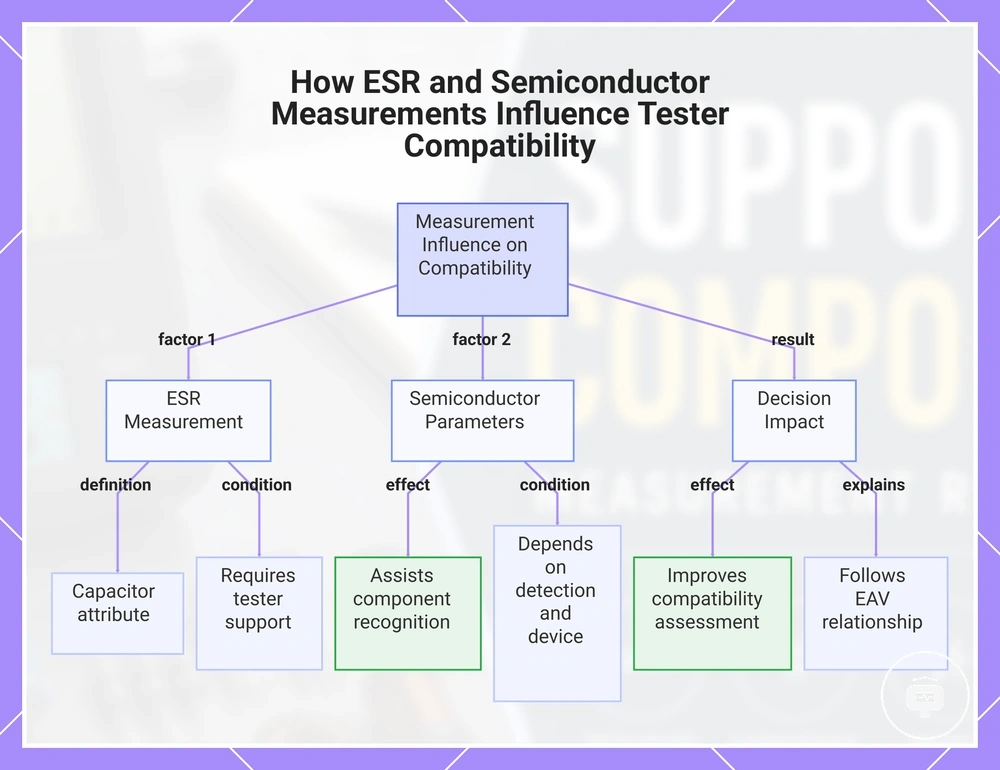
ESR and semiconductor parameter measurements can influence tester compatibility when the required measurement functions are supported by the tester. Because advanced capabilities vary between tester configurations, suitability depends on whether the tester can detect and evaluate the specific attribute needed for the component.
- ESR measurement: Equivalent series resistance is a capacitor attribute that may provide additional evaluation information when the tester supports ESR measurement. Compatibility depends on both the component characteristics and the available measurement function.
- Semiconductor parameters: Supported testers may identify semiconductor characteristics that assist with component recognition and related measurements. Available parameters depend on the tester's detection capabilities and the semiconductor device type.
- Decision impact: Advanced measurement functions can improve compatibility assessment for supported components, but meaningful evaluation depends on whether the required attribute can be detected and reported by the tester.
These capabilities follow an entity-attribute-value relationship in which the component is the entity, ESR or a semiconductor characteristic is the attribute, the measured result is the value, and the tester's supported functions determine whether that information is available for compatibility decisions.
This chart illustrates how ESR and semiconductor parameter measurements influence tester compatibility, covering measurement functions, conditions, and the resulting assessment impact.
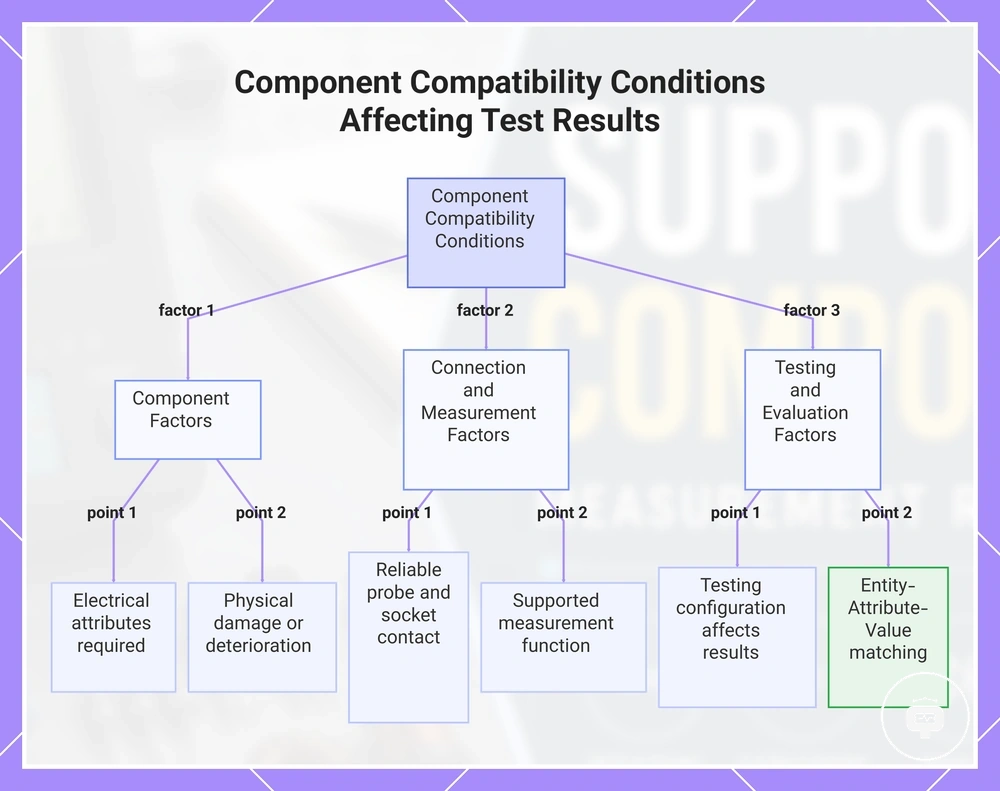
Component Compatibility Conditions That Affect Test Results
Component compatibility depends on the component's electrical characteristics, connection requirements, and the tester's supported capabilities rather than on the component name alone. A tester may evaluate a component only when its attributes can be detected through a compatible connection method and supported measurement function.
The checklist below summarises the main conditions that influence whether an electronic component tester is suitable for evaluating a particular component.
- Component characteristics: The component entity should have electrical attributes that the tester is designed to identify or measure. Compatibility depends on the relationship between the component type and the supported measurement function.
- Component condition: Physical damage, deterioration, or other condition-related factors may affect whether the tester can detect or evaluate the component as intended.
- Connection method: Meaningful evaluation depends on reliable electrical contact, and compatibility can vary according to the selected probe and socket connections.
- Measurement capability: A tester may support a component category but not every required attribute or measurement function. Suitability depends on whether the required characteristic can be detected and evaluated.
- Testing conditions: Measurement outcomes may vary with the testing configuration, component state, and the functions supported by the tester.
An entity-attribute-value approach can support compatibility decisions by matching the component entity with its required attributes and the tester's supported functions before interpreting measurement results. This criteria-based evaluation also provides a practical foundation for a selection checklist when comparing tester capabilities.
This chart summarizes the key conditions that influence whether an electronic component tester can evaluate a component, grouped into three categories.