Types of electronic component testers and their use cases
Electronic component tester types are categories defined by their testing role, connection method, and application context. An electronic component tester may be designed to identify components, measure selected electrical properties, or support a more specific testing task. Its practical capabilities depend on the functions, supported components, and connection methods provided by the design. This classification helps distinguish how different tester types are intended to be used rather than treating every tester as having the same purpose.
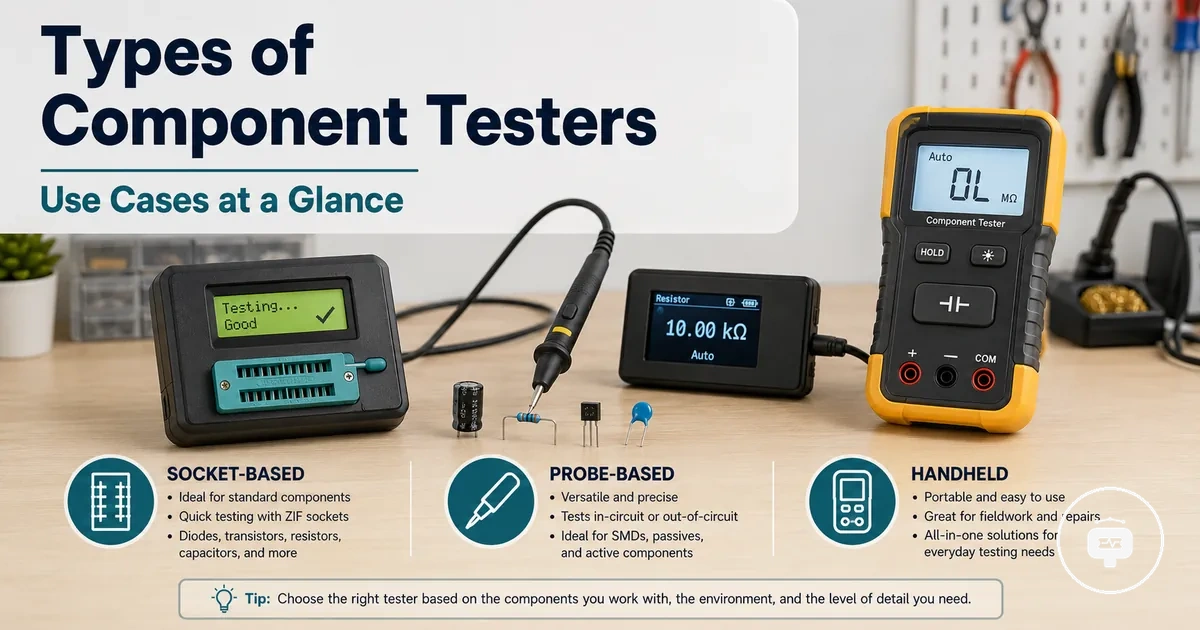
Connection method provides a primary way to classify electronic component tester types. Socket-based testers are intended for components that can be inserted into a compatible test socket, while probe-based testers make direct contact with accessible terminals or surfaces. Handheld and portable testers describe physical form and operating environment, but portability alone does not determine which components or measurements a tester can support.
Testing role adds another level of classification by separating general-purpose electronic component testers from specialised designs that focus on particular component groups or measurement needs. These categories can overlap in many cases, so a tester is most accurately classified by its primary testing role, connection method, supported component types, and intended application.
Electronic component tester types and their testing roles
Electronic component tester types are categories that define how a component tester performs its measurement role through a specific connection method and intended application. A tester type is identified by how it connects to a component, the component categories it is designed to evaluate, and the measurements it can perform. These categories distinguish the purpose of different tester designs without implying that every component tester provides the same functions. When testing capabilities overlap, classification is usually based on the tester's primary testing role.
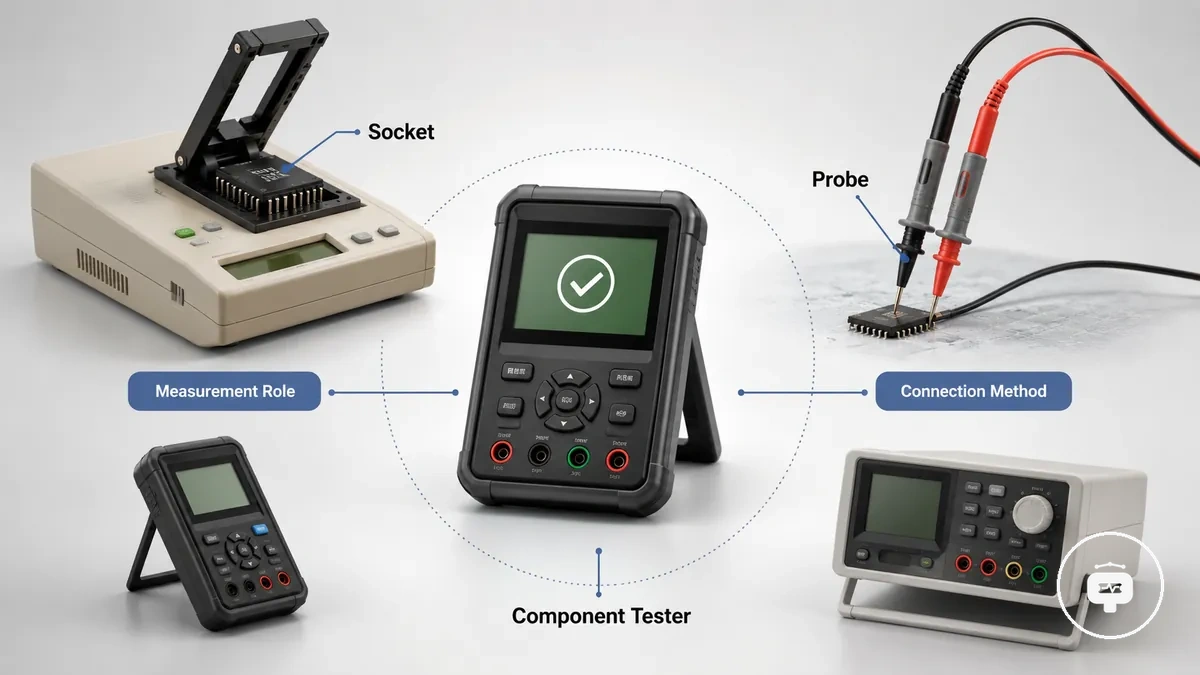
An electronic component testers overview becomes easier to interpret when tester types are grouped by connection method and measurement role rather than physical appearance. Socket-based component testers are intended for components that can be inserted into a compatible socket, while probe-based component testers measure components through direct electrical contact. The supported component categories and available measurements may vary according to the tester's design and intended application.
Classification boundaries can overlap because a single component tester may combine multiple testing functions. Even so, each tester type is primarily defined by its connection method, supported component categories, and measurement role. This classification provides a consistent foundation for understanding the individual tester types discussed in the following sections.
Socket-based electronic component testers
Socket-based electronic component testers use a dedicated socket to hold a compatible component in position during testing. The socket connection influences component placement by aligning the leads with fixed electrical contacts before a measurement begins. This testing method is commonly used with leaded components that fit the available socket configuration. The testing conditions depend on the component package, socket design, and the functions supported by the tester.
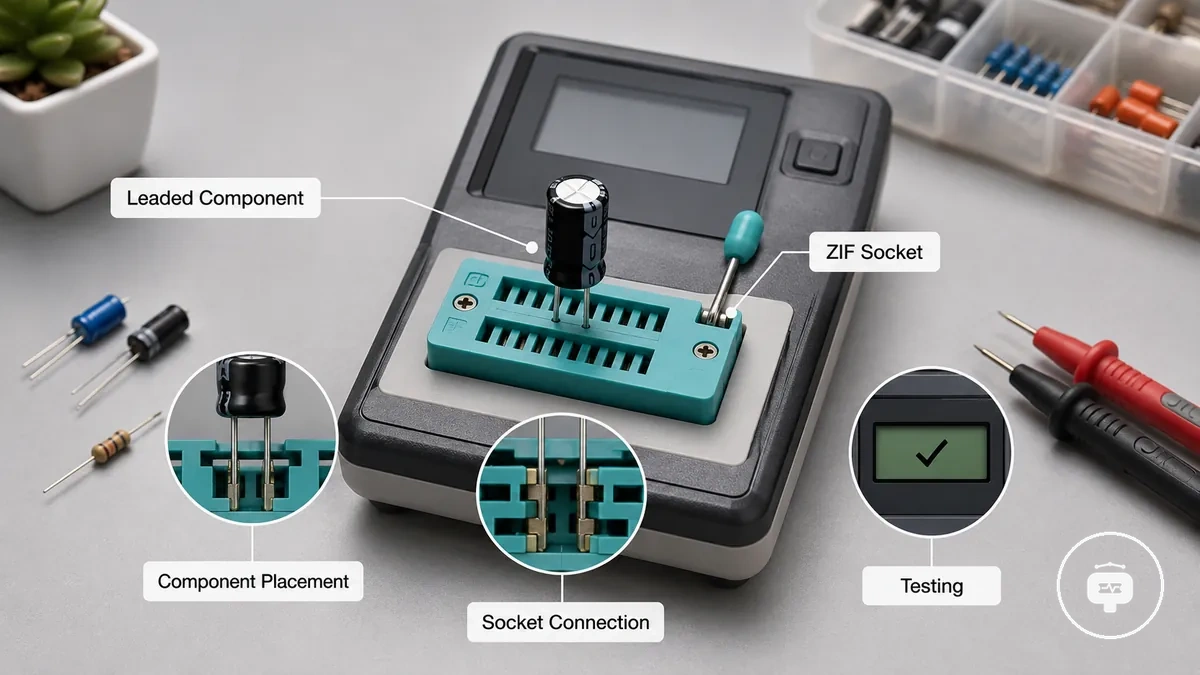
A socket tester may include a standard socket or a ZIF socket to simplify component placement and reduce mechanical stress from repeated insertion and removal. Correct component placement remains important because lead alignment and orientation can influence the quality of the electrical connection established during testing. Socket-based testing is generally intended for compatible component formats rather than every type of electronic component.
Socket-based electronic component testers differ from probe-based methods because the electrical connection is created through the socket instead of handheld probes. This connection method can provide stable contact for supported leaded components, while components with different package styles may require another testing approach. The appropriate testing method depends on the component format, socket compatibility, and the intended application.
Probe-based electronic component testers
Probe-based electronic component testers use test probes to make direct electrical contact with accessible points on a component during testing. This connection method depends on physical access to component leads, terminals, or exposed contacts instead of placing the component into a socket. Probe-based testing may be suitable when the required contact points are accessible and the tester supports the intended measurements. The testing conditions depend on component access, connection stability, and the intended application.
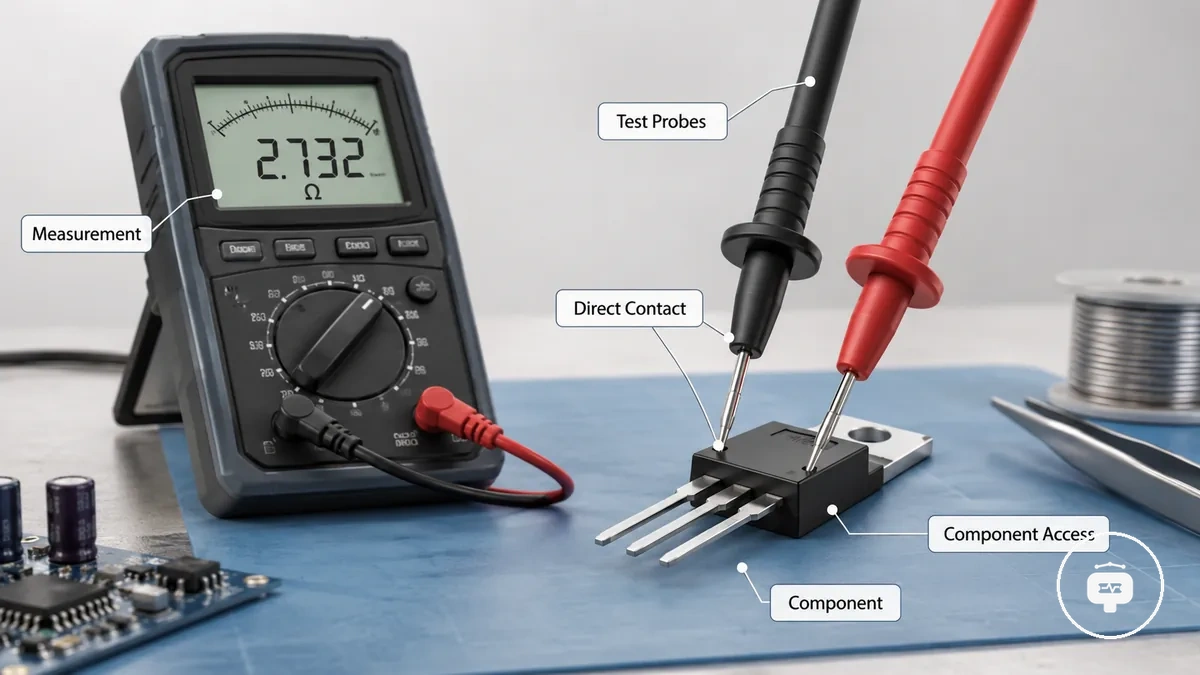
Probe-based electronic component testers provide connection flexibility because the test probes contact the component directly rather than through a dedicated socket. Their practical use depends on whether the probes can reach the required contact points and maintain stable electrical contact during measurement. Compared with socket-based testers, probe-based testers are generally intended for situations where direct component access is available.
- Test probes connect directly to accessible component contacts.
- Component access determines whether probe-based testing is practical.
- Measurement quality may depend on accurate probe placement and stable electrical contact.
- Supported measurements vary according to the tester design and intended application.
Handheld and portable component testers
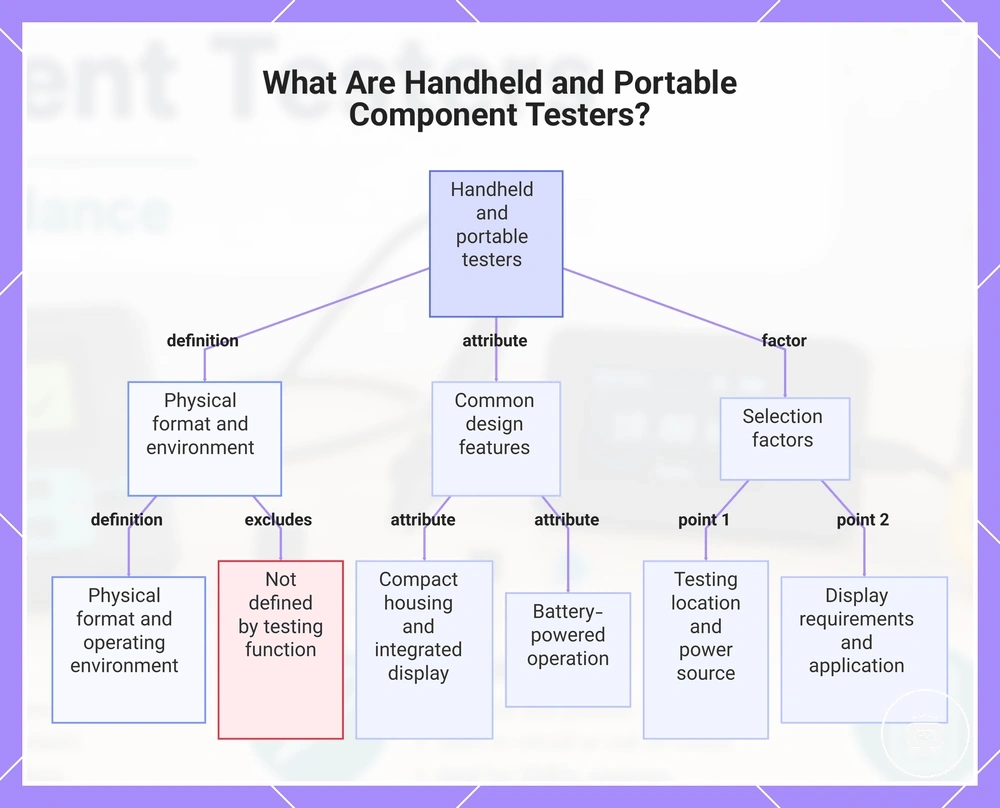
Handheld and portable component testers are defined by their physical format and operating environment rather than by a specific testing function. A handheld tester is designed to be carried and operated away from a fixed workspace, while a portable tester may support testing where a bench-mounted instrument is not practical. Portability can influence testing workflow, but it does not determine the supported component types or measurement capabilities.
Handheld and portable testers may include a compact housing, an integrated display, and battery-powered operation, depending on the tester design. The display provides measurement information directly on the device, while battery power can support testing when a permanent mains connection is unavailable. These attributes influence how the tester is used in mobile environments rather than indicating a particular level of testing performance.
Handheld and portable component testers are often used for field testing, maintenance, and other situations where testing takes place outside a permanent workbench. In contrast, bench-based testing typically places less emphasis on portability and more on a fixed operating environment. The appropriate tester depends on the testing location, available power source, display requirements, and the intended application.
This chart shows the definition, key features, and selection factors for handheld and portable component testers.
Specialized electronic component testers by component type
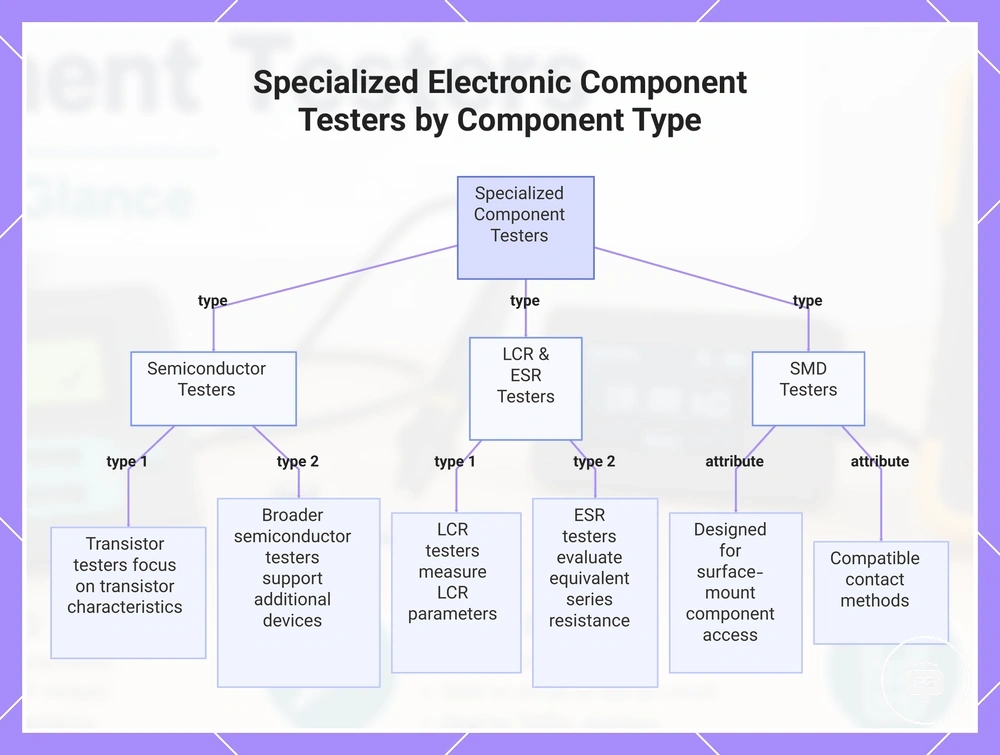
Specialized electronic component testers are designed to evaluate particular component groups by focusing on the measurements most relevant to those components. Instead of covering every electronic part in the same way, these testers are intended for specific measurement needs such as semiconductor analysis, inductance, capacitance, resistance, or equivalent series resistance. The appropriate tester depends on the component type and the required testing purpose.
Specialized tester categories are organised around the components they are intended to evaluate. A broader review of supported component types can help connect component format with the relevant measurement requirements before a testing approach is selected.
Semiconductor testers and transistor testers focus on semiconductor components, although their identification and measurement functions may vary by design. A transistor tester may concentrate on transistor-related characteristics, while a broader semiconductor tester may support additional compatible device categories.
LCR testers focus on inductance, capacitance, and resistance, while ESR testers evaluate equivalent series resistance in supported capacitor-testing contexts. SMD testers are designed around surface-mount component access and compatible contact methods. These categories may overlap, so the suitable specialized tester depends on the target component, measurement objective, and intended application rather than the tester name alone.
This chart shows the main categories of specialized electronic component testers, including semiconductor testers, LCR & ESR testers, and SMD testers, and their key characteristics.
Transistor and semiconductor component testers
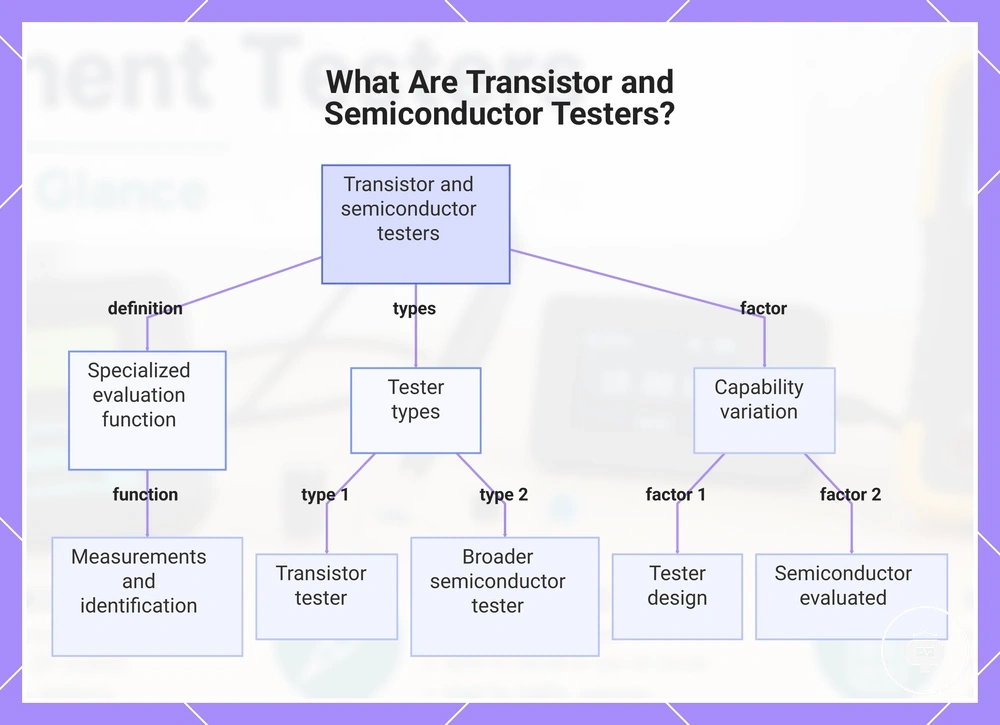
Transistor and semiconductor component testers are specialised testers intended to evaluate compatible semiconductor devices through the measurements and identification functions supported by the tester design. A semiconductor tester may evaluate transistors and, depending on its capabilities, may also support other semiconductor components. The available measurements and level of analysis vary by tester.
A transistor tester focuses on transistor-related measurements, while a broader semiconductor tester may support compatible devices such as MOSFETs when designed for those components. Device support, measurement capability, and analysis depth depend on the tester design and the semiconductor being evaluated.
This chart explains the definition, types, and capability factors of transistor and semiconductor testers.
LCR and ESR component testers
LCR testers and ESR testers differ primarily in measurement purpose. An LCR tester is intended to measure inductance, capacitance, and resistance, while an ESR tester focuses on equivalent series resistance in supported capacitor-testing contexts. The appropriate tester depends on the component being evaluated and the measurement required.
The comparison below shows how their measurement roles differ.
| Tester type | Measurement focus | Use context |
|---|---|---|
| LCR tester | Inductance, capacitance, and resistance | Used when these electrical properties need to be evaluated for compatible components. |
| ESR tester | Equivalent series resistance | Used when evaluating equivalent series resistance in supported capacitor-testing applications. |
Although both tester types may be used in capacitor-related measurement contexts, their roles are not interchangeable. Measurement capability depends on the tester design, supported components, and intended application.
SMD component testers
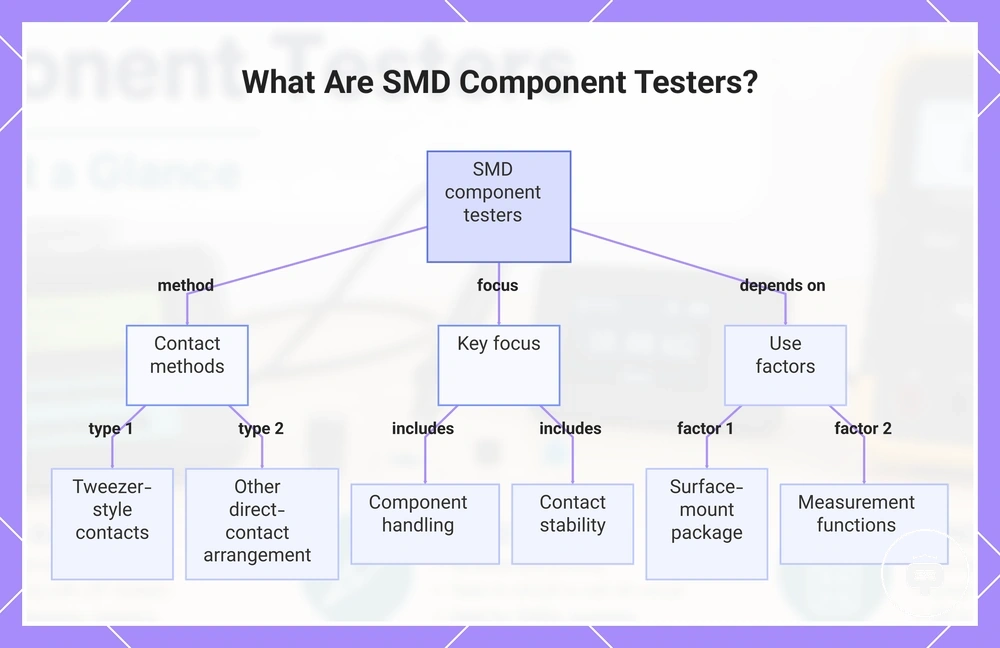
SMD component testers are intended for testing surface-mount components through contact methods suited to compact component packages. An SMD tester may use tweezer-style contacts or another direct-contact arrangement to reach the component terminals, depending on the tester design. Supported measurements and component sizes vary by device.
SMD component testers focus on component handling and contact stability rather than broad component coverage. Their practical use depends on the surface-mount package, the contact method, the tester's measurement functions, and whether stable contact can be maintained during testing.
This chart explains the purpose, contact methods, key focus areas, and practical use factors of SMD component testers.
How electronic component tester types differ in measurements and applications
Electronic component tester types differ according to their measurement capability, application, component suitability, and connection method. Selecting a tester depends on which electrical attributes need to be measured, the type of component being evaluated, and the intended testing environment rather than the tester category alone.
Comparing tester types by measurement capability and application helps distinguish their intended roles without repeating individual tester descriptions. Connection method influences how the tester contacts the component, while measurement capability determines which electrical characteristics the tester is designed to evaluate.
| Tester type | Measurement capability | Typical application | Connection method |
|---|---|---|---|
| Socket-based tester | Supported measurements depend on the tester design. | Testing compatible leaded components. | Component inserted into a test socket. |
| Probe-based tester | Supported measurements depend on direct electrical contact. | Testing components with accessible terminals. | Test probes contact the component directly. |
| LCR tester | Measures inductance, capacitance, and resistance. | Evaluating compatible passive components. | Varies by tester design. |
| ESR tester | Measures equivalent series resistance. | Supported capacitor-testing applications. | Varies by tester design. |
| SMD tester | Supported measurements depend on the tester design. | Testing compatible surface-mount components. | Direct contact, often using tweezers or similar contacts. |
Selection should be guided by the required measurement capability, component suitability, application, and connection method. For a broader instrument comparison, compare with a multimeter to understand how the measurement roles differ.
Which component tester type fits a specific testing need
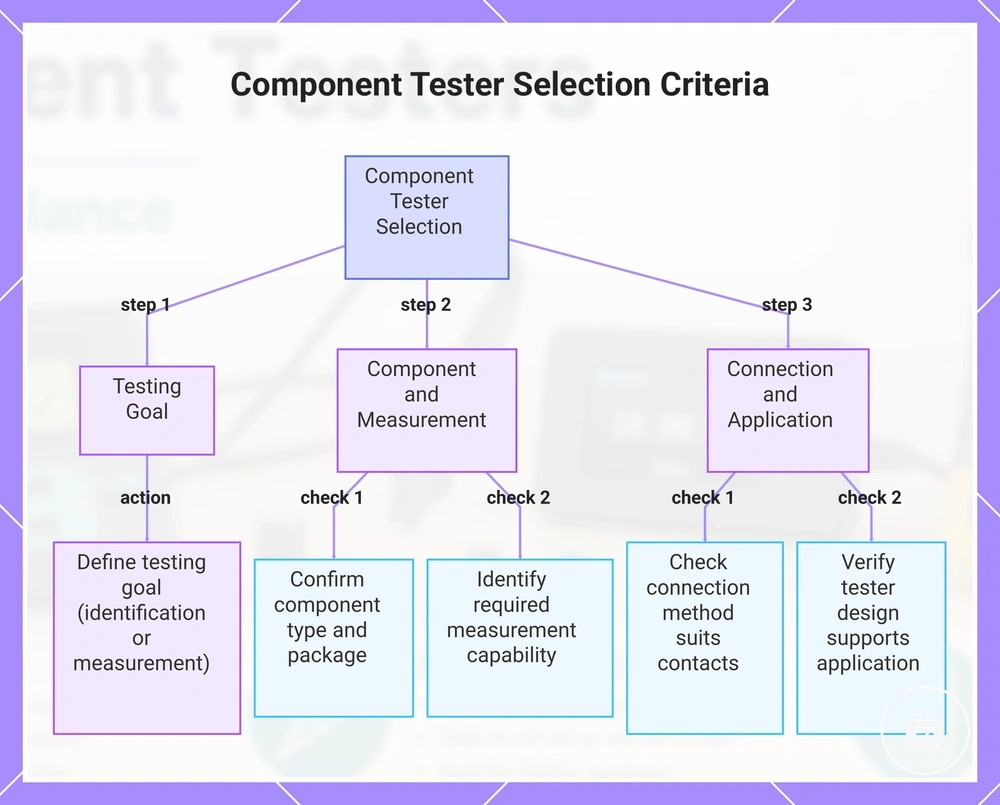
Tester selection depends on the testing goal, component type, measurement need, and connection method. The most suitable component tester type is the one that supports the required measurements for the target component and the intended testing environment rather than offering the greatest number of functions.
Selection criteria become clearer when the testing task is defined before comparing tester types. Component package, electrical measurement requirements, and the available contact method all influence whether a particular tester type is appropriate for the application.
Use the following checklist to evaluate which tester type best matches the testing need:
- Define the testing goal, such as component identification or electrical measurement.
- Confirm the component type and package format.
- Identify the required measurement capability.
- Check that the connection method suits the available component contacts.
- Consider whether testing will take place on a workbench or in a portable environment.
- Verify that the tester design supports the intended application.
Because testing needs vary, no single tester type is appropriate for every situation. For a broader evaluation process, choosing the right tester type provides additional guidance for comparing these selection criteria.
This chart shows the key criteria for selecting a component tester type based on testing goal, component requirements, and connection needs.