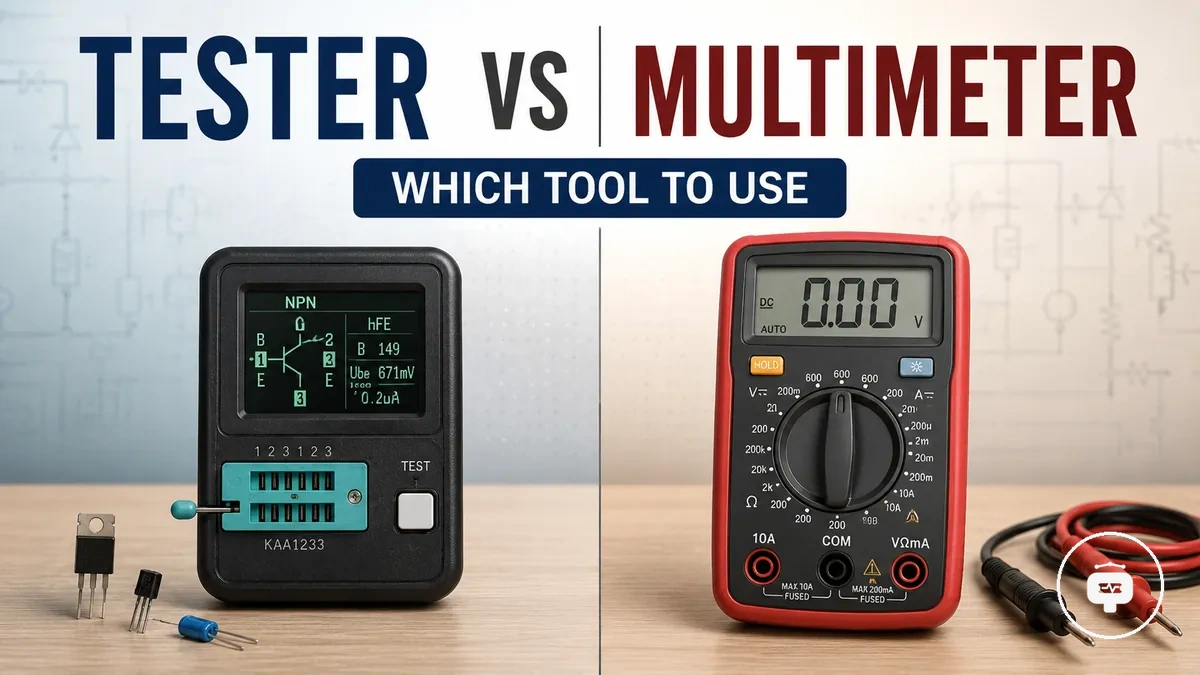
Electronic Component Tester vs Multimeter: Choosing the Right Testing Tool
Choosing between an electronic component tester and a multimeter depends on the testing objective, the component being evaluated, and the type of measurement required. An electronic component tester is generally intended for component identification and analysis, while a multimeter is primarily designed to measure electrical values such as voltage and resistance. Neither testing tool is inherently better because suitability depends on the component testing task and the information needed.
An electronic component tester may be the more appropriate choice when identifying an unknown component or examining its characteristics. A digital multimeter may be more appropriate when verifying electrical measurements or checking circuit conditions. Although the two tools can overlap in certain functions, similar measurements do not always provide the same information or support the same testing decision.
Understanding the different roles of a component analyzer and a multimeter helps match the testing tool to the intended purpose. Comparing their capabilities, the information they provide, and the situations they are designed for creates a clearer basis for selecting the most suitable tool for a specific measurement task.
Electronic Component Testers and Multimeters Serve Different Testing Purposes
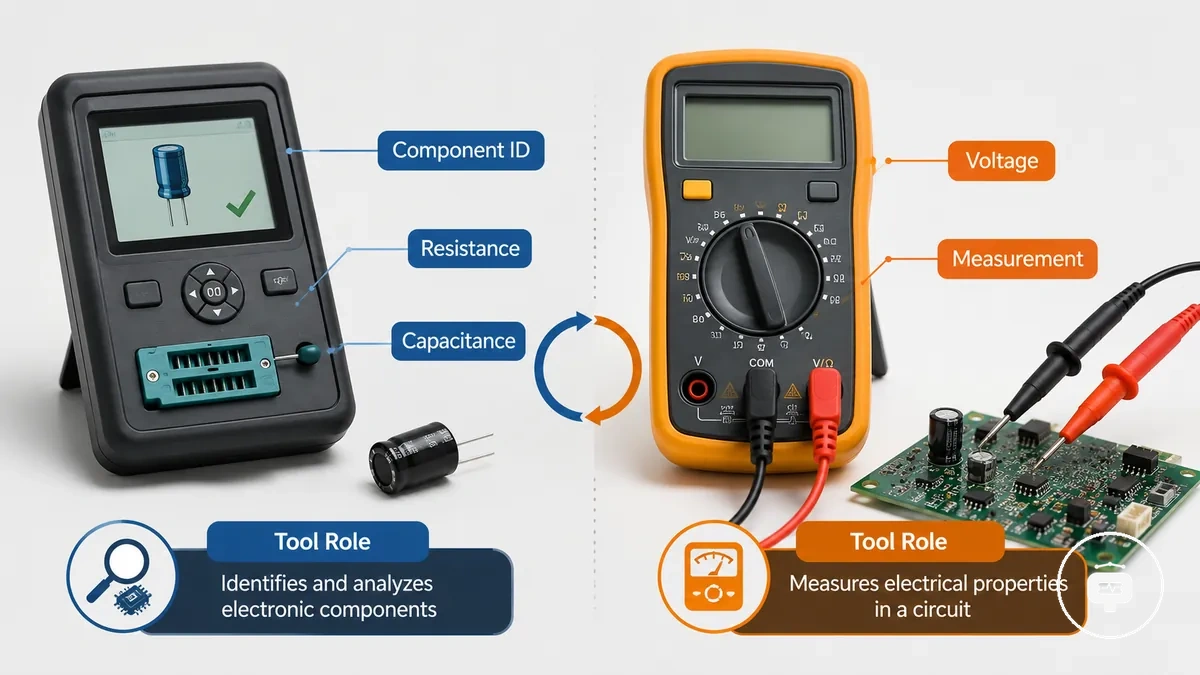
An electronic component tester and a multimeter are designed for different testing purposes, although they may be used together during the same diagnostic workflow. An electronic component tester primarily supports component identification and component analysis, while a multimeter is intended for electrical measurement such as checking voltage, current, or resistance. For broader background on these tools, see the electronic component testers guide.
Understanding the primary role of each tool helps establish the correct testing context before comparing their capabilities in greater detail.
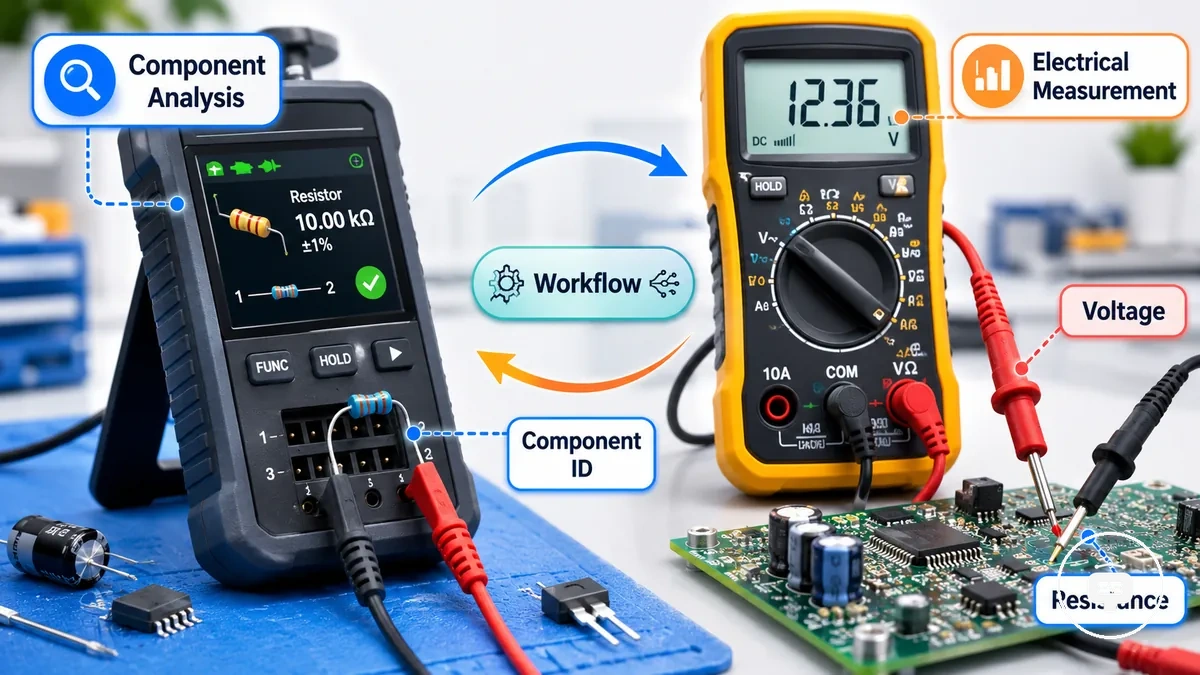
An electronic component tester is commonly used for component identification and to provide information that supports analysis of individual electronic parts. A multimeter, also referred to as a meter, is generally used for electrical measurement within circuits or across components. Although both tools assist with electronics testing, each is designed to provide a different type of information that supports a different testing purpose.
Their capabilities can overlap in certain situations, but that overlap does not make their roles identical. Depending on the testing objective and workflow, an electronic component tester may complement a multimeter rather than replace it, making tool selection dependent on the information required.
Component Identification and Measurement Differences Between Testers and Multimeters
Component identification and measurement differ between a tester and a multimeter because each tool is designed to provide different types of testing information. A component tester is generally intended to identify components and analyze characteristics such as resistance or capacitance, while a multimeter focuses on electrical measurement, including values such as voltage, current, and resistance. Similar measurements do not necessarily provide identical testing information because the measurement method and intended purpose differ.
Understanding these measurement differences helps explain why the same component may produce readings that serve different diagnostic purposes depending on the tool being used.
| Tool | Measurement capability | Information provided | Typical use case |
|---|---|---|---|
| Component tester | Component identification and analysis of attributes such as resistance or capacitance, depending on device design | Identifies the component and reports measured characteristics that assist interpretation | Evaluating individual electronic components before or outside a circuit |
| Multimeter | Electrical measurement of values such as resistance, voltage, or current within its supported measurement range | Provides electrical measurement values for circuit checks and diagnostics | Testing circuits or verifying electrical conditions |
Measurement results should be interpreted according to the purpose of the tool rather than assumed to be interchangeable. The practical meaning of a reading can vary with device design, testing conditions, and measurement method, so understanding accuracy limits helps place results in the proper context without assuming identical capability.
These differences influence tool selection by matching the required information to the testing task. When component identification is the priority, a tester may provide more relevant analysis, whereas a multimeter is often the more appropriate choice when the objective is to verify electrical measurement values during circuit testing.
Electronic Components Each Tool Can Test and Measure
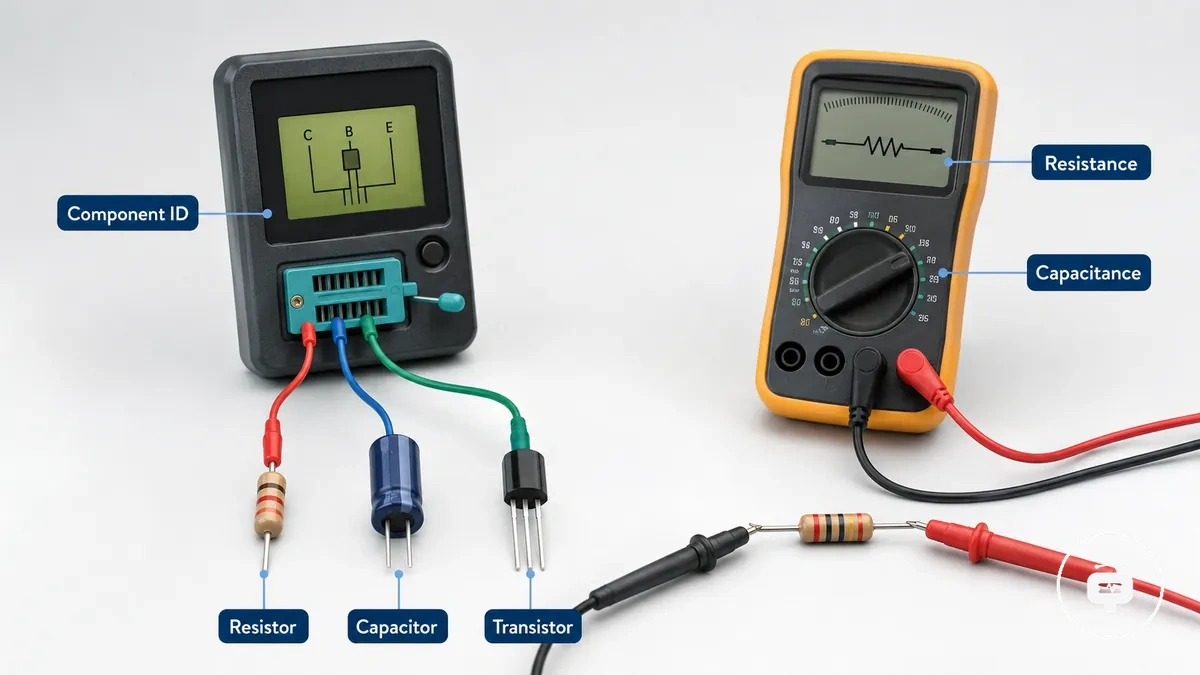
The electronic components each tool can test and measure depend on the component category and the information required from the measurement. A component tester may be more suitable when the goal is to identify a resistor, capacitor, transistor, or another semiconductor component and examine its characteristics, while a multimeter is generally used to obtain electrical readings from the same electronic components. The most appropriate tool depends on the testing objective rather than the component alone.
Understanding the attributes measured for common component categories makes it easier to choose the appropriate testing approach.
| Component | Attribute measured | Tool suitability | Result meaning |
|---|---|---|---|
| Resistor | Resistance value | Component tester or multimeter, depending on the testing objective | Helps evaluate whether the measured resistance matches the expected condition |
| Capacitor | Capacitance | Component tester may provide additional identification, while a multimeter may support capacitance measurement when available | Supports assessment of the capacitor's measured characteristics |
| Transistor | Component identification and basic characteristics | Component tester is often chosen when identification is required | Helps distinguish the transistor type before further testing |
Measurement results should be interpreted according to the component and the testing task rather than assumed to be equivalent across tools. For example, different tester types may be selected when the priority is identifying semiconductor components instead of obtaining a single electrical reading. Matching the measured attribute to the required testing decision provides a clearer basis for selecting the appropriate tool.
When to Use a Component Tester or a Multimeter
Tool choice depends on the testing situation, the measurement need, and the user goal rather than on a single feature. A component tester may be more suitable when component identification is part of the testing requirement, while a multimeter may be the more appropriate choice when the objective is to verify an electrical measurement during repair or diagnosis. Selecting the appropriate tool begins with matching the testing requirement to the expected outcome.
The following selection criteria can help determine which tool better fits a particular use case before testing begins.
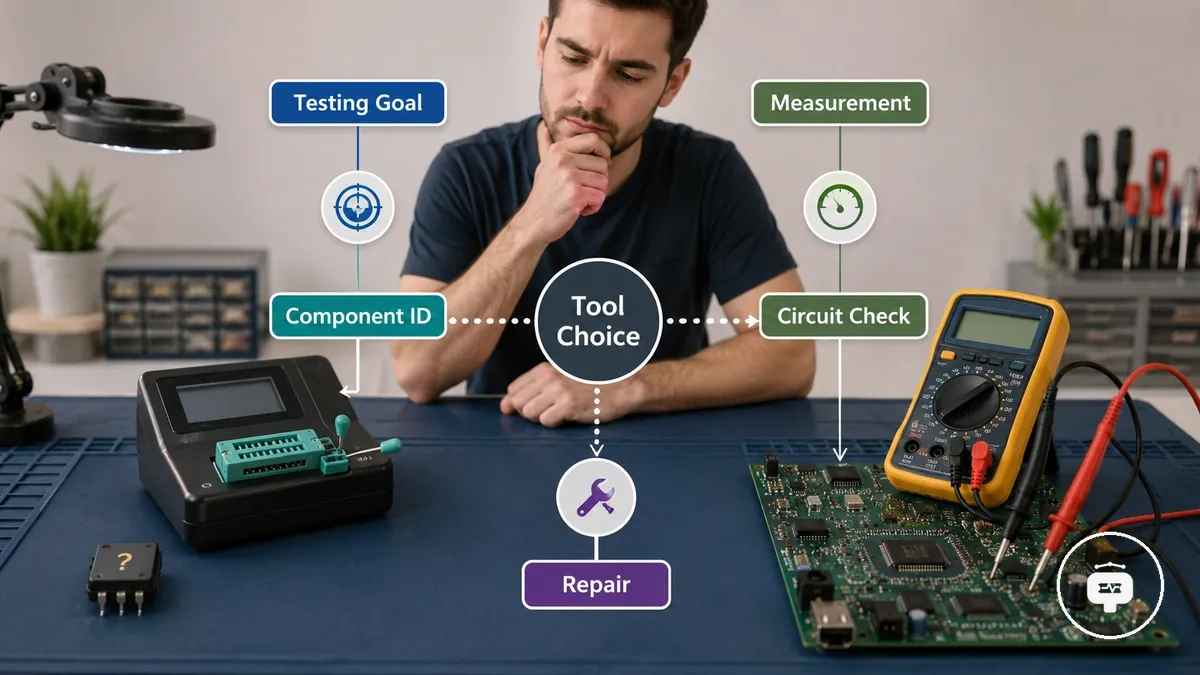
- Testing goal: Use a component tester when identifying an unknown component is part of the objective. Use a multimeter when confirming an electrical reading is the primary measurement need.
- Component type: The appropriate tool depends on whether the component requires identification, electrical verification, or both during the testing process.
- Required measurement: Match the tool to the measurement needed instead of assuming similar readings provide the same information. This approach also supports broader guidance on choosing a tester for different applications.
- Environment: During repair, testing conditions and access to the component may influence which measurement approach is more practical.
In many repair situations, neither tool replaces the other completely. A component tester may be preferred when identification helps guide the next step, while a multimeter may be more appropriate when verifying circuit measurements. Applying clear selection criteria to the testing situation helps match the tool to the intended outcome without assuming one solution suits every application.
Accuracy, Limitations, and Testing Boundaries
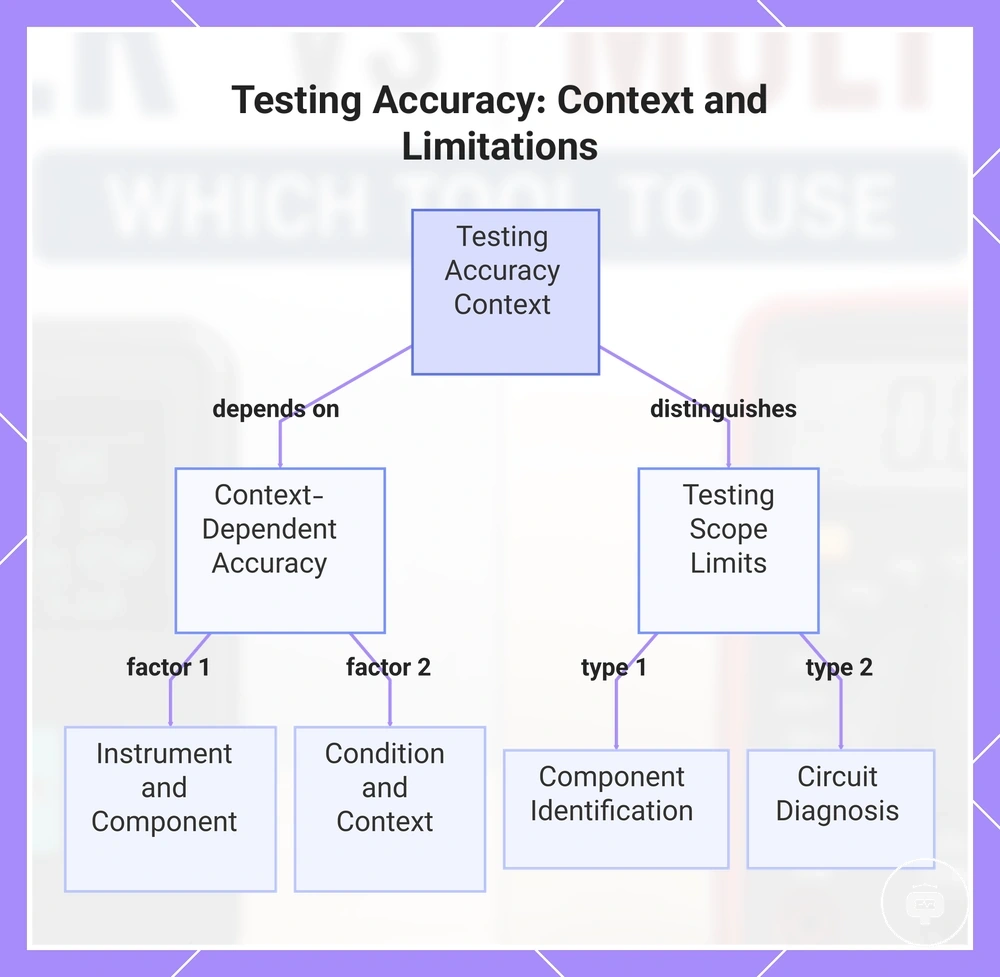
Accuracy and usefulness depend on the instrument, the component being tested, the testing condition, and the measurement context. A measurement result should be interpreted within those conditions rather than treated as an absolute indication of component health or circuit performance. Both a component tester and a multimeter have capability limits that can influence how confidently a measurement result is interpreted.
Practical limitations become clearer when the testing setup and intended measurement are considered. A component tester may provide useful identification under suitable testing conditions, while a multimeter may provide reliable electrical measurements within its intended purpose. The interpretation of a measurement result can vary with the component, instrument, connection method, and surrounding circuit conditions, so accuracy should be evaluated in context rather than assumed to be constant.
Testing boundaries also affect the distinction between component identification and circuit diagnosis. Identifying a component does not necessarily diagnose the behaviour of the complete circuit, and a circuit measurement may not fully explain the condition of an individual component. Understanding in-circuit testing limits helps clarify how testing conditions influence interpretation and why selecting the appropriate method depends on the measurement objective.
This chart shows the key factors that influence measurement accuracy and the distinction between component identification and circuit diagnosis.
Component Tester Alternatives and Related Measurement Tools
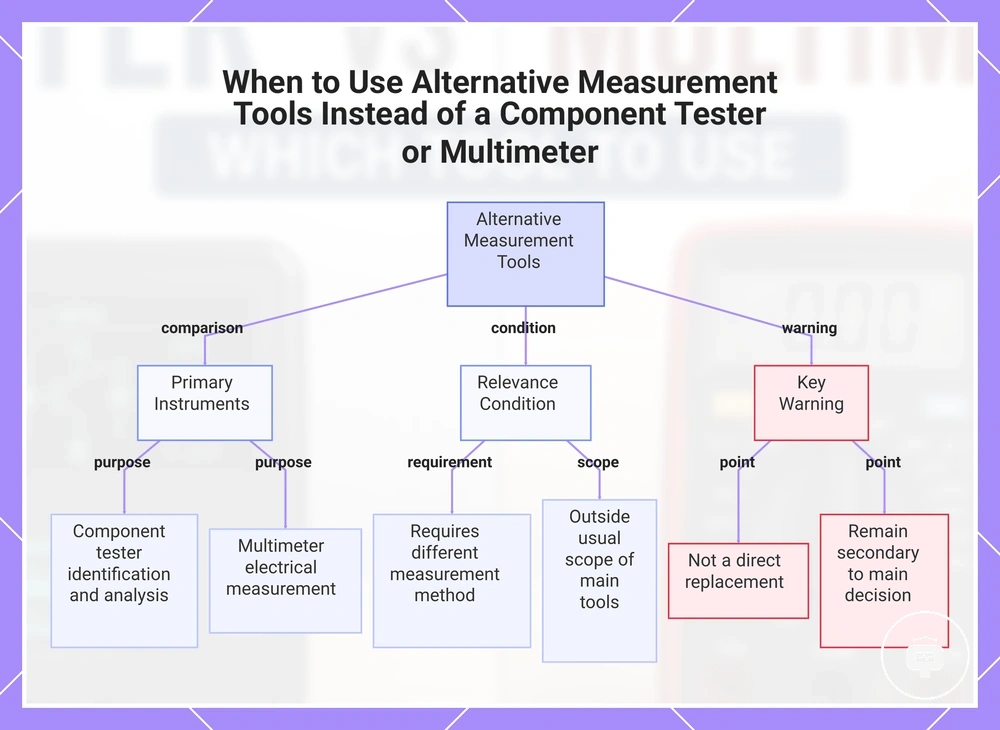
An alternative tool may appear in the same comparison when a testing condition requires a measurement method that a component tester or multimeter does not primarily provide. The component tester and multimeter remain the main testing instruments in this decision, while related measurement tools are relevant only when the required information falls outside their usual scope.
A component tester is generally used for component identification and analysis, while a multimeter is generally used for electrical measurement. An alternative measurement tool may become relevant when a specific attribute, method, or testing condition requires a different form of measurement, but that tool should not be treated as a direct replacement without considering the intended purpose.
Related tools should therefore remain secondary to the current comparison. Their role is to clarify adjacent testing options, not to shift the decision away from choosing between a component tester and a multimeter for the measurement task at hand.
This chart shows the primary testing instruments, the conditions that make alternative tools relevant, and key warnings about using them as replacements.
Component Tester vs Multimeter for Beginners and Electronics Repair
For a beginner, tool choice should follow the testing needs and repair objective rather than assume that one instrument suits every electronics repair task. A component tester may be more appropriate when the user needs to identify an unknown component, while a multimeter may be more suitable when the repair workflow requires electrical measurements. User experience also matters because the information each tool provides must be understood in the context of the test being performed.
Common repair situations can be matched to the tool characteristics required for the task.
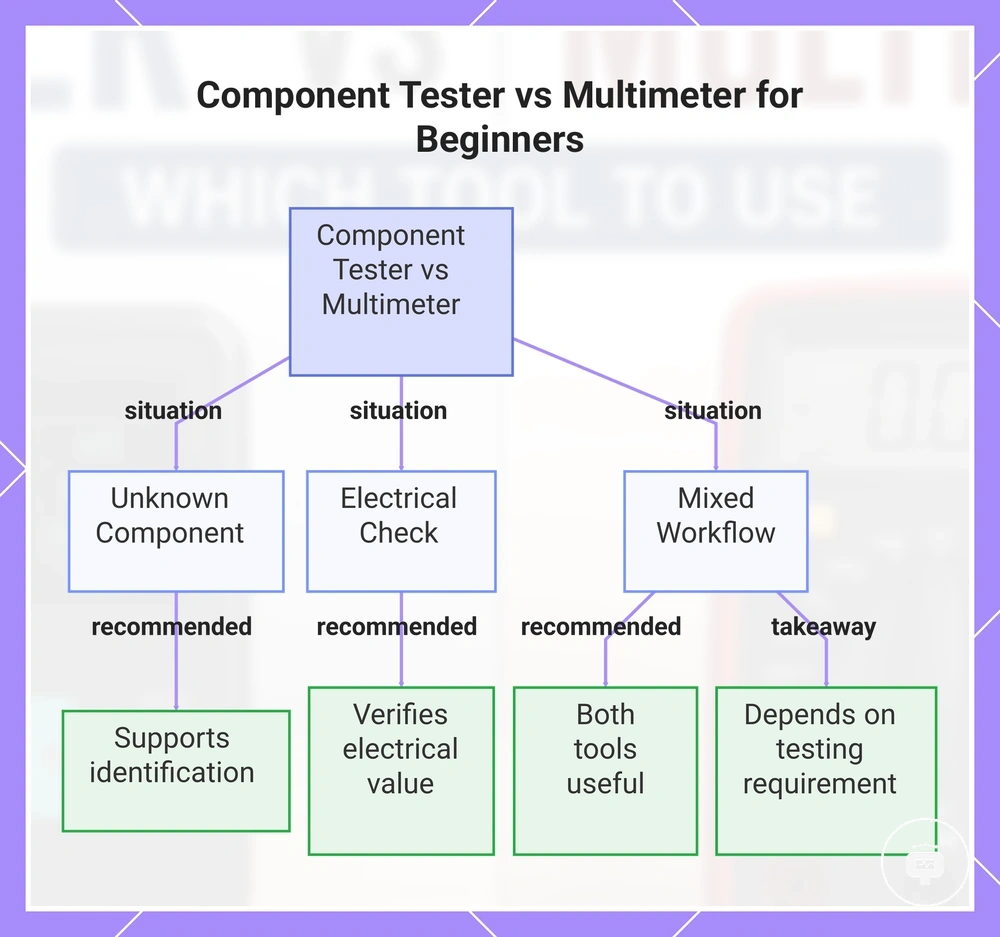
- Unknown component: A component tester may support identification when the component type or basic characteristics are unclear.
- Electrical check: A multimeter may suit a testing objective that involves verifying an electrical value during diagnosis.
- Mixed repair workflow: Both tools may be useful when component identification and electrical measurement are required at different stages.
- Beginner use: The clearer tool choice is the one that provides the information needed without adding unnecessary complexity to the current task.
Beginners and repair-focused users should select a component tester, a multimeter, or both according to the component being examined, the required measurements, and the intended decision. The same tool may not fit every repair context, so practical suitability depends on how well the instrument supports the specific testing requirement.
This chart shows three common repair situations and the recommended tool choice between a component tester and a multimeter.