Electronic Component Testers for Beginners
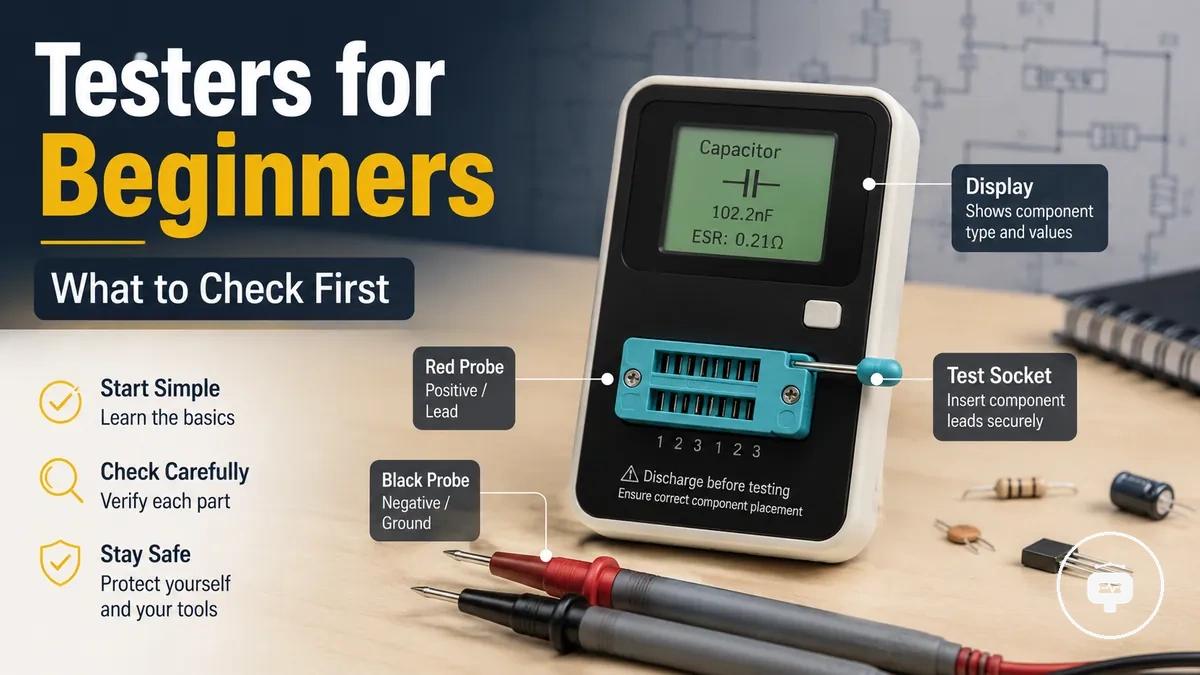
An electronic component tester is a component testing tool that helps a beginner identify electronic components and view basic measurements in a clear, accessible way. It defines the starting point for learning how common components can be recognised and assessed without requiring advanced testing knowledge. An electronic component tester supports early evaluation by presenting identification and measurement information in a format that is often easier for beginners to interpret. Its purpose is to simplify basic component assessment rather than replace advanced diagnostic equipment or specialised testing methods.
Beginners should evaluate simplicity, supported components, readability, tester features, and overall usability before choosing a testing device. The most suitable electronic tester may depend on the types of components being checked, the measurements required, and how clearly results are presented. These selection criteria help beginners focus on practical decision-making instead of unnecessary complexity, while recognising that different users may have different testing needs. Understanding a tester's capabilities provides the foundation for evaluating whether it matches the intended application.
What Beginner Electronic Component Testers Are and What They Can Identify
An electronic component tester is a testing tool designed to identify components and display basic information about their characteristics. For a beginner, it provides a straightforward way to recognise common component types before moving on to more advanced testing methods. An electronic component tester defines the starting point for understanding how electronic components can be identified without relying only on visual inspection.
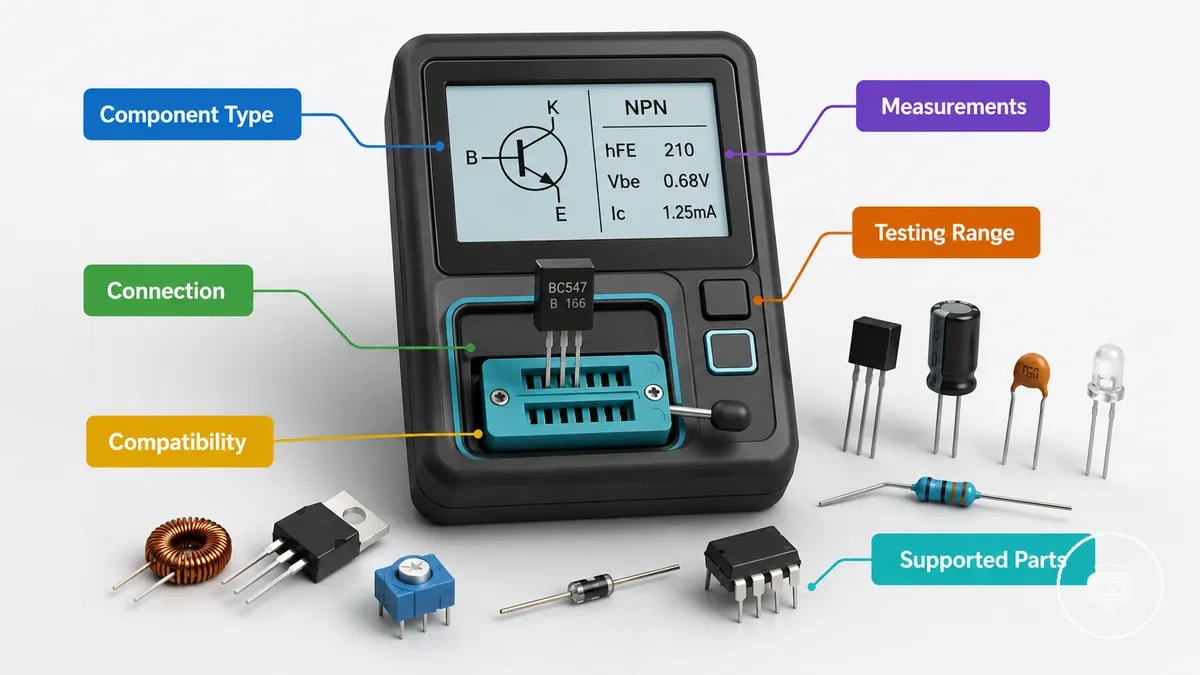
Electronic component testers identify common parts by recognising their component type and, where supported, presenting related identification attributes such as a component value. Before looking at measurement details, it is helpful to distinguish identification from measurement because they serve different purposes. You can learn more about what testers measure separately. The following illustration shows the general identification role of a beginner electronic component tester.
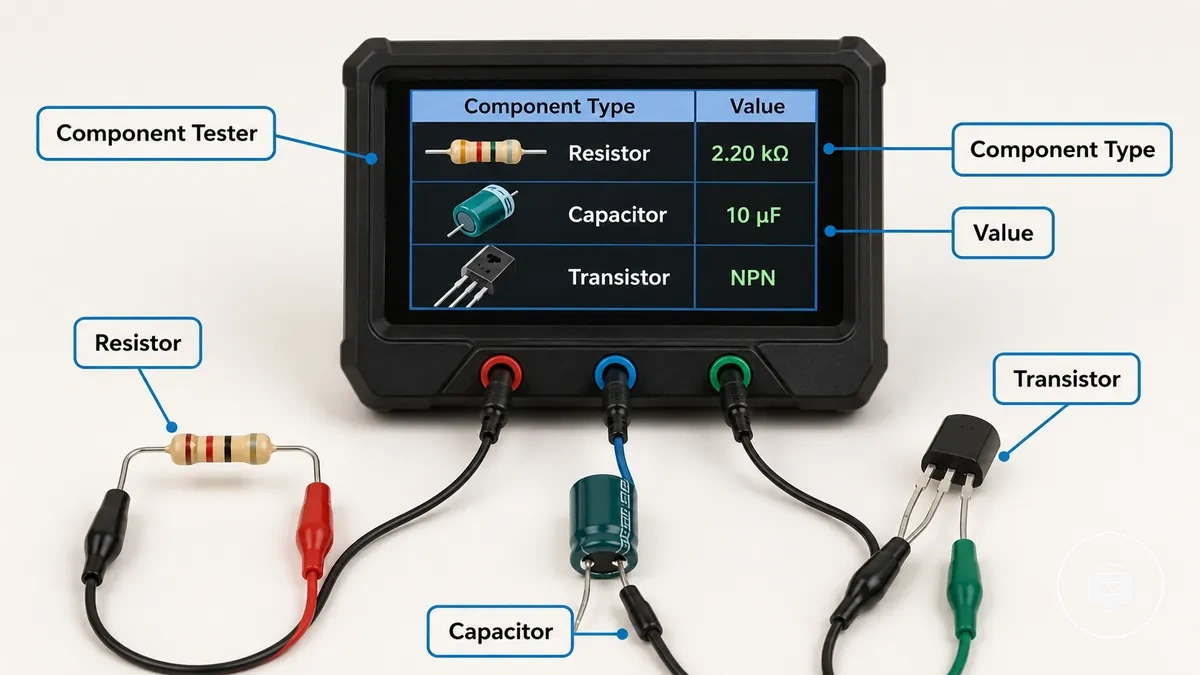
An electronic component tester may identify components such as resistors, capacitors, and transistors, depending on the tester design and the condition of the component. A component identifier can help beginners distinguish between common component types before interpreting additional information. The identification process often starts by recognising the component category and then displaying related attributes when they are supported. Different testing tools can vary in the range of components they identify, so capabilities depend on the specific tester.
Although an electronic component tester simplifies identification, it has practical limitations that beginners should understand. Support for particular component types and identification results can vary with tester design and the characteristics of the connected component. Keeping these limitations in mind makes it easier to evaluate usability and decide whether a tester is appropriate for the intended learning or testing tasks.
Features That Make Electronic Component Testers Easier for Beginners
Beginner-oriented features support easier operation and clearer understanding when learning to use an electronic component tester. A clear display, straightforward controls, and readable results can reduce unnecessary complexity during beginner use. Because familiarity and testing needs vary, the value of individual features depends on the user and the tester design.
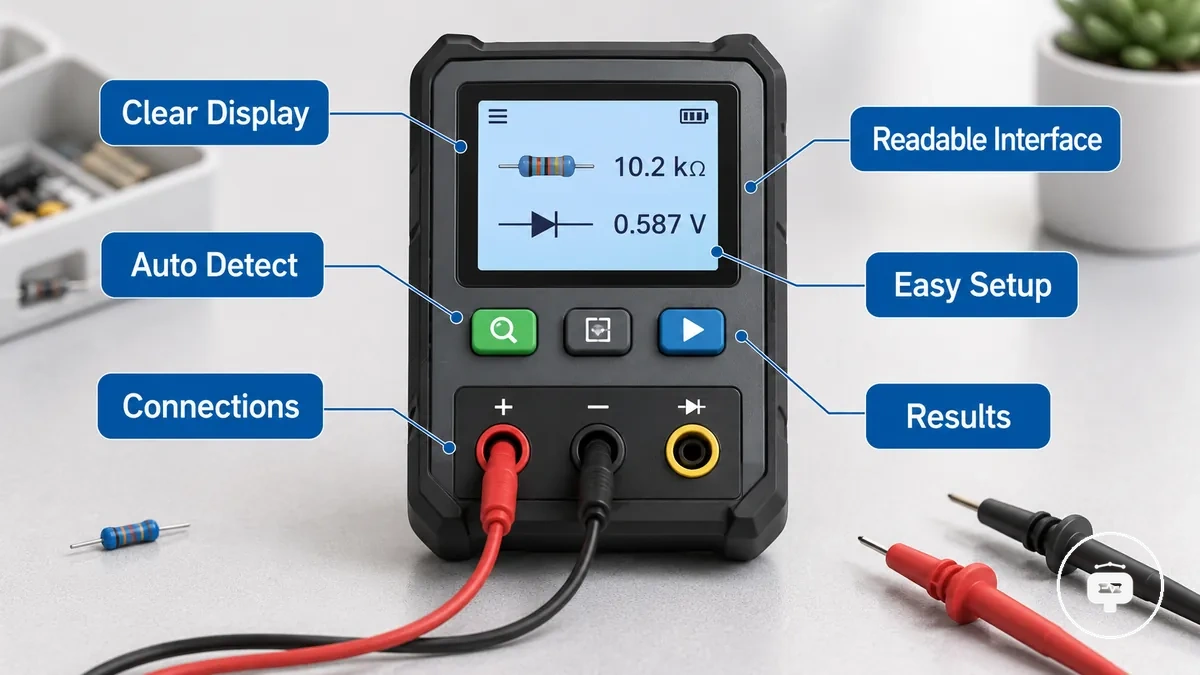
Usability features help beginners interpret results by making common tasks easier to follow rather than by adding technical complexity. The following checklist highlights attributes that commonly contribute to readability and ease of operation.
- Clear display: A readable display or good screen clarity helps with reading results and recognising displayed information.
- Automatic detection: Automatic detection may identify supported components before presenting available information.
- Simple connections: Clearly marked connections and an uncomplicated setup help beginners connect components with less confusion.
- Readable interface: An interface with simple labels and symbols supports interpretation without overwhelming new users.
- Supportive features: Practical features can improve beginner use by presenting information in a clear and consistent way.
These features support confidence by making tester operation and result interpretation easier to understand, although outcomes still depend on user familiarity and the tester's capabilities. As experience grows, beginners can better recognise which features match their preferred way of working without assuming every tester offers the same level of usability.
Component Support and Measurements to Check Before Buying
Component support and measurements should match the components you intend to test and the information you expect the tester to provide. Before choosing a tester, compare its supported component types with your measurement requirements because compatibility depends on the tester design, configuration, and testing range.
Component support shows which parts a tester may recognise, while measurement capability describes the information it may provide for those parts. These two attributes should be checked together because identifying a component does not necessarily mean every expected measurement is available. The testing range also matters when the characteristics of a component fall outside what a tester is designed to assess. Connection method and component condition may further affect whether a reading can be obtained or interpreted. The table below separates component type, measurement capability, operating condition, and the practical decision each factor supports. For a broader explanation of measurement functions, see what testers measure.
| Component type | Measurement capability | Condition | Practical decision |
|---|---|---|---|
| Supported parts | Available measurements | Varies by tester design | Confirm component support before choosing a tester. |
| Different component types | Measurement capability | Depends on testing range and configuration | Match the tester to the components you expect to check. |
Compatibility should be treated as conditional rather than universal because supported parts and measurements can differ between testers. A component may also require a suitable connection and condition before the tester can provide useful information. Checking component types, measurement capability, and testing range together helps align the tester with the intended use without assuming support for every part or result.
How to Choose a First Electronic Component Tester
Choose a first tester by matching its capabilities to your beginner needs and intended use rather than looking for a universal option. The selection process depends on the components you plan to check, the measurements you need, and the level of usability you expect from the tester. A clear set of selection criteria helps beginners evaluate options based on practical needs instead of focusing only on the number of features available.
The main criteria for choosing a tester should connect the tester's attributes with the outcomes they support. Consider the following factors when evaluating a first tester:
- Experience level: Beginner users may prefer features that make basic operation and interpretation easier to understand.
- Intended components: Consider whether the tester supports the component types you expect to examine.
- Portability: Evaluate whether portability matches where and how the tester will be used.
- Display readability: A clear display can support easier reading of results and information.
- Connection methods: Consider whether the available connections fit the components and testing situations you expect.
- Features: Evaluate features based on their usefulness for your specific beginner needs and use case.
Different beginners may prioritise different features depending on their goals. A user focused on learning component identification may value simplicity and display readability, while another user may place more importance on portability or broader testing options. Feature trade-offs are part of the decision because adding more capabilities may not always match a beginner's actual requirements. The most suitable choice depends on balancing usability, intended tasks, and available features.
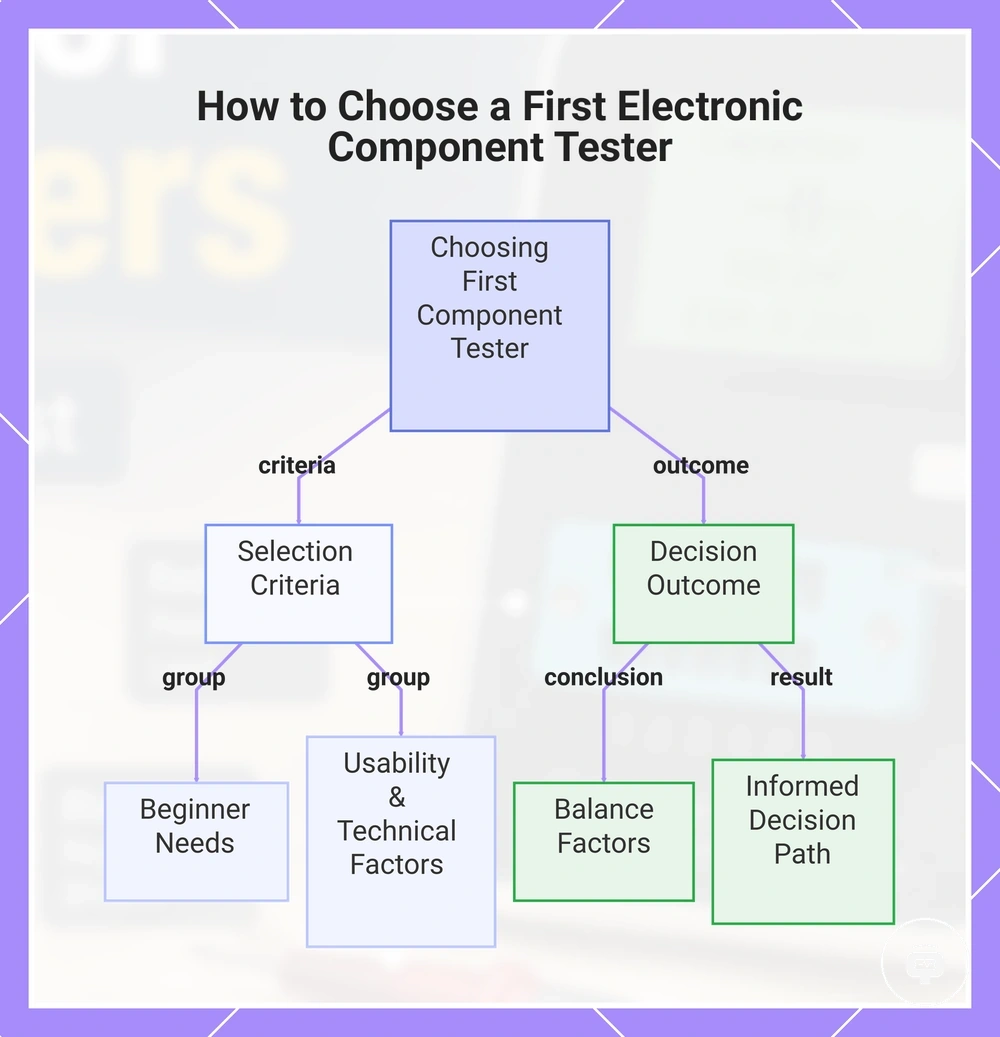
To choose a beginner-friendly tester, evaluate the factors that directly affect your expected use rather than relying on rankings or universal recommendations. Considering selection criteria such as beginner needs, portability, display readability, connection methods, and features can help create a more informed decision path.
This chart shows the main selection criteria and the decision outcome for choosing a beginner-friendly component tester.
Beginner Testing Mistakes and How to Avoid Incorrect Results
Incorrect results often happen when testing conditions or expectations do not match the tester's capabilities. Beginner mistakes can affect readings without necessarily indicating that the tester or the component is faulty. Incorrect handling, unsupported parts, or misunderstandings during interpretation may all contribute to misleading outcomes. Recognising these conditions early can help reduce avoidable errors while keeping expectations realistic.
Common mistakes usually involve connections, unsupported parts, or reading misunderstandings rather than a single underlying problem. Following a consistent first testing workflow can help reduce avoidable mistakes by encouraging the same basic checks before interpreting results. Incorrect results may have multiple possible causes, so readings should be considered alongside the testing conditions. The way a component is connected, its condition, and the tester's supported functions may all affect the outcome. Careful interpretation is often more reliable than relying on a single unexpected reading.
Electronic component testers have practical limitations, so unexpected readings do not always indicate a faulty tester or component. Unsupported parts, unsuitable testing conditions, or interpretation errors may all influence the displayed result. When incorrect results continue after basic checks, additional testing methods may be appropriate instead of assuming one definite cause.
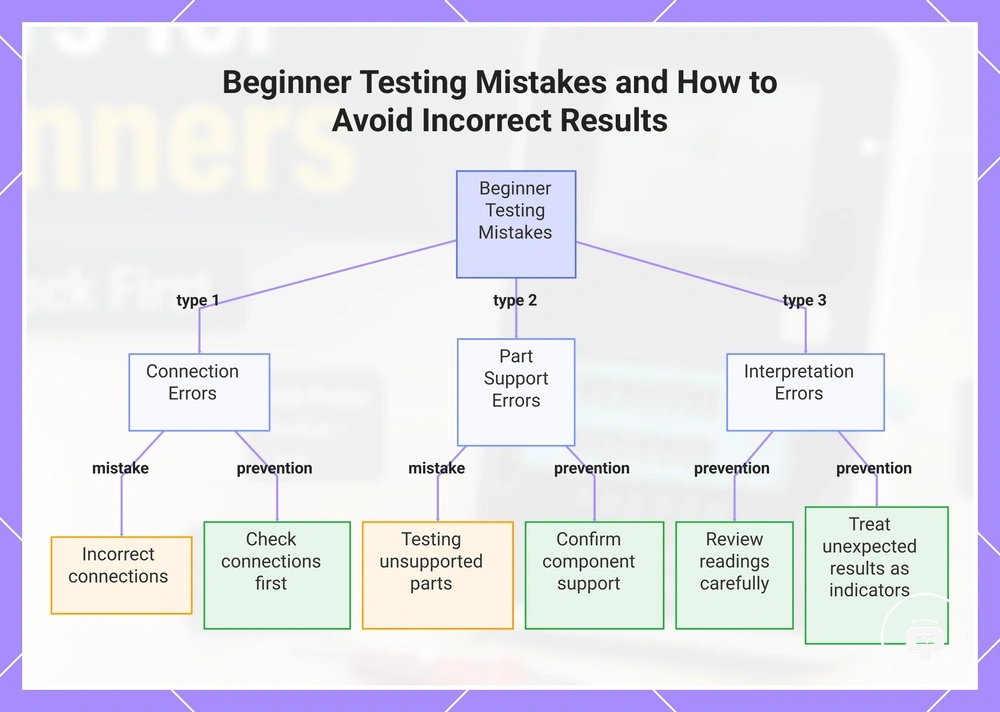
- Mistake: Incorrect connections. Likely reason: The component may not be connected securely or correctly. Prevention: Check the connections before interpreting the readings.
- Mistake: Testing unsupported parts. Likely reason: The component may fall outside the tester's supported parts. Prevention: Confirm component support before testing.
- Mistake: Misunderstanding readings. Likely reason: The displayed values may be interpreted without considering the testing context. Prevention: Review the readings carefully before drawing conclusions.
- Mistake: Expecting definitive results from every test. Likely reason: Tester capabilities and component conditions can vary. Prevention: Treat unexpected results as indicators that may require further checking rather than final answers.
This chart shows the three main categories of beginner testing mistakes and the corresponding prevention actions to avoid incorrect results.
Starter Kits, Portability, and Value Considerations
A starter kit provides value when its included items support a beginner's intended use without adding unnecessary complexity. Value depends on how well the accessories, portability, and features match beginner priorities rather than on cost alone. A practical evaluation focuses on everyday usefulness instead of assuming that a larger kit or higher price offers better suitability.
Compare value factors together because each one affects how useful a starter kit may be for different situations. The cost and feature checklist below helps organise these considerations without treating any single factor as universally more important.
- Accessories: Check whether the included items support the components and testing tasks you expect to perform.
- Portability: Consider whether the tester and accessories are convenient to carry, store, or use in different locations.
- Display usability: A clear display can make readings easier to interpret during regular use.
- Practical usefulness: Evaluate whether the included features support your expected workflow instead of focusing only on feature quantity.
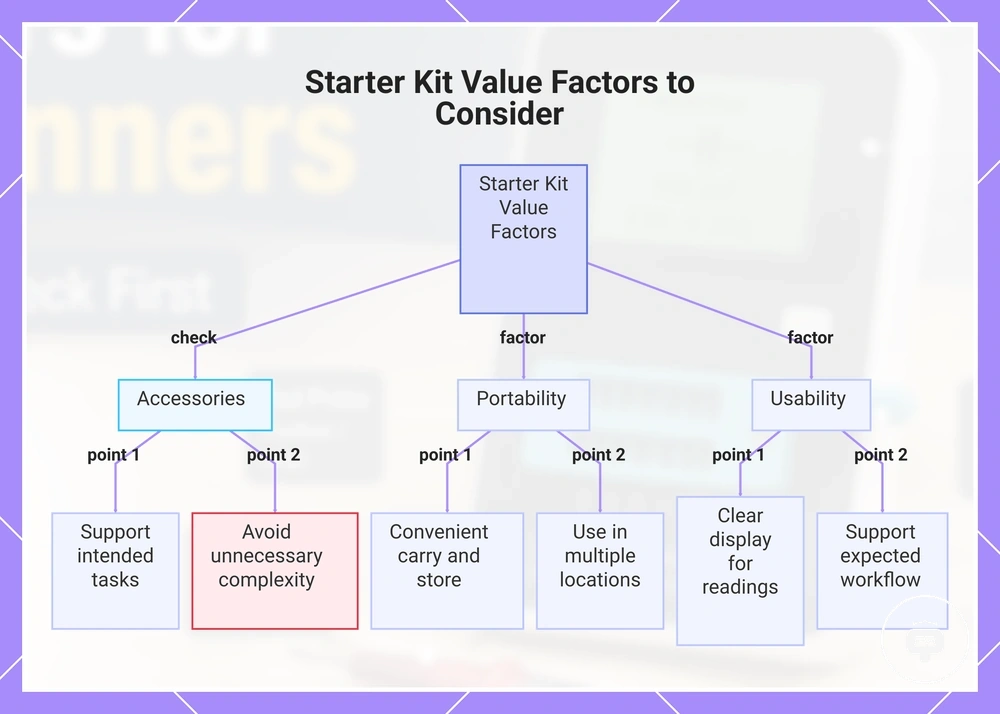
- Value: Compare the complete starter kit against your beginner priorities because practical value depends on the balance between accessories, portability, usability, and intended use.
Different beginner priorities can lead to different value decisions. A portable setup may suit users who expect to test in multiple locations, while a kit with more relevant accessories may better support a permanent workspace. Reviewing these value factors together encourages a balanced decision without implying that higher cost or additional features automatically provide greater practical usefulness.
This chart shows the key factors to evaluate when assessing a starter kit's value for beginners, including accessories, portability, and usability.
Common Questions About Beginner Electronic Component Testers
Can a beginner tester identify every electronic component?
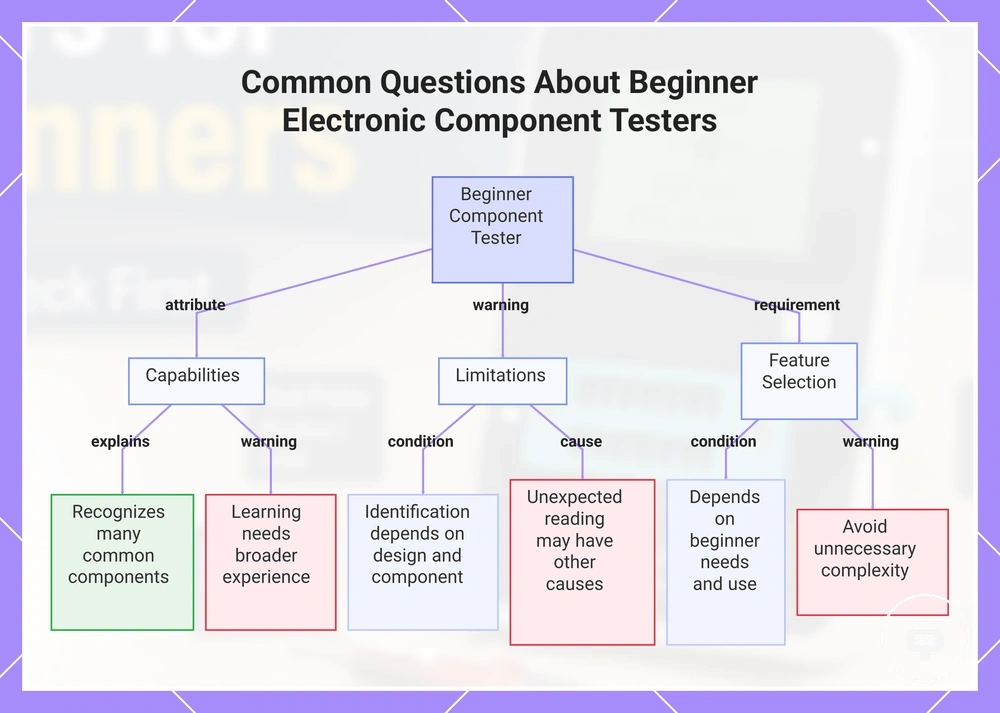
No. A beginner tester may identify many common components, but its capability depends on the tester design, configuration, and the component being tested. Unsupported parts or unsuitable testing conditions may limit the result.
Is a beginner tester suitable for learning component testing?
Yes, in many cases. A beginner tester can support component testing practice by helping users recognise parts and interpret basic information, although broader understanding still develops through experience.
Does an unexpected reading always mean a component is faulty?
No. An unexpected reading may result from connections, unsupported parts, testing conditions, or interpretation rather than a faulty component. These limitations should be considered before reaching a conclusion.
Should beginners select a tester with more features?
Not necessarily. A suitable selection depends on beginner needs, intended use, and whether the available features support practical testing without adding unnecessary complexity.
What are the main limitations of a beginner tester?
A beginner tester has limitations because its capability depends on supported components, available functions, and testing conditions. The testing tool may support basic identification and interpretation, but it may not replace every measurement or diagnostic method.
This chart summarizes the main capabilities, limitations, and selection guidance for beginner electronic component testers based on common questions.